Showing posts with label Dungeons and Dragons. Show all posts

Friday, September 20, 2019

Fiction Friday: The Stonehaven League LitRPG Series

The "LitRPG" genre of fiction is...a weird one. It's not actually that new, however. The premise is that these stories revolve around characters who exist within a "game world", i.e., a world that is artificial and created as part of a game. The degree of artificiality in LitRPG stories can be very obvious, or the world can feel completely real, but still exist only as a result of some kind of game.

The first novel that I know of which seems to fall into this kind of genre, although it wasn't called LitRPG at the time, was Andre Norton's 1978 novel Quag Keep, a story about a bunch of adventurers in a medieval-type world who are actually people from Earth who were playing a role-playing game. Given that Dungeons and Dragons was roughly four years old at the time Quag Keep was published, Norton got on the bandwagon fairly early. Many others have followed over the years, one of the most notable being Joel Rosenberg's Guardians of the Flame series, which started in 1983 with The Sleeping Dragon. Beyond the written word, one would consider the '80s Dungeons and Dragons cartoon series to be a form of this kind of genre, as would, I feel, the movie TRON.

But the modern form of the LitRPG novel is more commonly based around computer games, and more specifically, not people transported to worlds, but rather, immersed in them through play. As virtual reality is more common these days in gaming (and is growing bigger every day), the idea of putting on VR gear and submerging yourself as your character in a game world is very real. In fact, Ready Player One  is a perfect example of this.

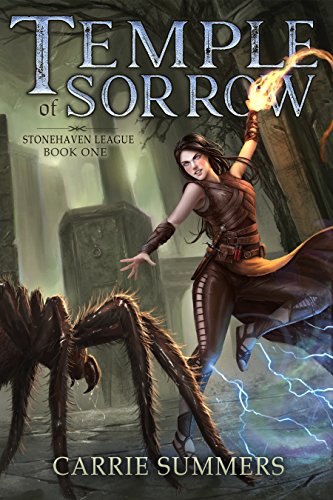
Enough background, though. Author and former (?) game developer Carrie Summers has written an engaging series of LitRPG / GameLit novels, which in the "real world" are set a few decades in the future, where virtual reality gaming has extended all the way to cybernetic implants that dump the virtual reality of the game right into our brain's perception of reality. In her first book, Temple of Sorrows, a young woman named Devon leaves her crappy job to work as a kind of "super-tester" for a gaming company, Relic Online, in order to push the game and it's artificial intelligence to the limits of what a capable, creative player can do.
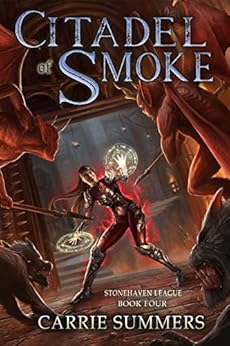
Devon logs into the game, stunned at how the direct neural connection to the game world seems so incredibly real - she can feel the wind and the sun, the grass under her feet and the cloth of her clothing. Yet, the world still acts as a Computer Role-Playing Game. She has skills and abilities and she gains experience and levels up. When she kills a monster, the touch of a blade turns the monster's body into "loot" that can be used for other things. Anyone who has played a computer RPG in the last...twenty years or so will be familiar with the tropes of the world and its setting.

I don't want to give the plot away, but suffice to say, there is plenty going on in both the real world and the in-game world. This leads to dangers on both sides for Devon, something that I found interesting as it kept the story from being completely about her adventures in-game, and raised the stakes a little. And while this book is probably perfectly fine for a YA audience, there is a good deal of violence going on, so those who want action will get that, while those who like the puzzle-solving and "game-ness" of a game world will also have something to look forward to.

Overall, this is an enjoyable series. If I remember right, I've read the first three books, and I am just starting the fourth. with six books currently in the series. These books are all available in Kindle (for purchase or Kindle Unlimited) and paperback, and the first four are currently available as audiobooks. If this seems in any way interesting to you, I definitely recommend checking them out.

Friday, September 13, 2019

Fiction Friday: THE LAST WISH: Introducing the Witcher

If you follow video gaming at all, you've likely heard of The Witcher series of open-world RPG video games. They feature the monster-hunting Witcher, Geralt of Rivia, wandering the world and killing that which goes bump in the night. The world of the Witcher is based around Slavic folklore, a flavor of Western monster mythology that is a little removed from what most of us are used to unless you are really into the subject of bestiary folklore.

But fewer people realize that the Witcher and his world started out as a series of short stories and novels by Polish author Andrzej Sapkowski. Most of the stories were written in the 1990s, but it wasn't until the mid-oughts and later that they were given English translations. Coming at the end of this year, Netflix is releasing a television series based around the stories, and of course both fans of the books and the video games are howling over how the details shown in the trailer don't do the series justice.

Curious about both such a popular video game character and what might drive Netflix to pick up the IP, I grabbed the first (chronologically) anthology of short stories, THE LAST WISH. I was immediately hooked. For a book translated from a different language, the prose is evocative and pulls you right into the world, a very dark, late medieval-era feeling fantasy realm, very similar to the Ravenloft setting of Dungeons & Dragons. If you aren't familiar with Slavic folklore, some of the creatures might seem unusual to you, but that slightly alien nature just adds to the creepiness of the setting - this isn't some adventurer going after your usual orcs and goblins, this is a true monster hunter, for whom a blend of swords, sorcery, and dark knowledge is needed to take on the evils lurking in the deep forests and crumbling towers.

So if you like dark fairy-tale fantasy with an Eastern European bent to it, do yourself a favor and check out Sapkowski's fiction. I'll definitely find time this fall to work my way through more of Geralt's adventures.

Wednesday, September 11, 2019

Wargaming Wednesday: Don't Feel Guilt Buying on eBay

Maybe this is a more controversial topic than I believe it is, but I find weird the pressure people feel against buying second-hand or portioned out miniatures on eBay. To be clear, I am not talking about buying re-casted (aka, illegally copied) miniatures - that's a no-no and should never happen. I'm talking about buying out-of-production miniatures, or second-hand miniatures owned previously by someone else, even if that person just bought a large boxed set (like Games Workshop's Dark Imperium boxed set) and is selling the individual miniatures a few at a time.

These out-of-production models were purchased like this on eBay

There can be a lot of reasons why you'd want to do this. For the out-of-production miniatures, you might just like a particular sculpt of a miniature, but it isn't made anymore. For me, I want to eventually buy and paint one of every GW Space Marine Chaplain, but there are only a handful still being made, while plenty of models with perfectly viable equipment loadouts are still usable in the current version of the game. Another reason might be that you're building, for example, a small display army using older, "retro" models. A lot of people these days are making small Rogue Trader-era forces more for the fun of rediscovering the models than anything else.

Some of the above, now stripped of paint and ready for rebirth!

Another aspect to buying online might be to find a model you want that's not available on its own. For Primaris Space Marines, for example, you cannot buy a Primaris Ancient (aka, Standard Bearer) as its own model anywhere except eBay, since it only comes in the Dark Imperium boxed set. The same goes for the Gravis Captain. In the past, this was likewise the case with other armies. The first official generic Ork Warboss to come with a power klaw didn't arrive until the Assault on Black Reach boxed set for 40K's 5th edition, along with Ork Deffkoptas mounted with rokkits (and the old Deffkopta model is absolutely hideous and ancient).

Tactical marines from the 1993 (!!!) 2nd Edition 40K boxed set.
And of course, another reason might be that you want that ONE particular bit for a model you're making. Maybe you like the look of a certain helmet or sword or gun. Maybe it fits with a theme, maybe the normal kit the part comes in only has 1 per box, and you need five. Sure, you're going to pay more money for it, but this is a leisure hobby, and eBay bits sellers are working from a sellers' market. I've bought plenty of little bits over time in order to build units of a certain theme, and while you're paying a premium for having that degree of choice, I never once felt cheated by the prices.

This Chaplain model has long been OOP. His gun is also an eBay bit purchase.
The biggest criticism or worry I've seen from people who don't want to buy on eBay is that you're not giving money to your Friendly Local Game Store (FLGS). Sure, that's true, but the same reasons you'd be buying on eBay are the same reasons you're not buying at your FLGS - the models and bits are either out of production, or they come in a larger boxed set and aren't sold individually. No one should feel guilty you're not buying a $160 boxed set from your FLGS when all you want is a handful of miniatures you can get on eBay for a fraction of that cost. And as for the idea that Games Workshop isn't getting your money - well, that's bullshit. They got their money for that particular model when that model was first purchased. It doesn't matter if the miniature is 30 years old - at some point, someone gave the company money for that object, and that's that. I hear this as an argument against used book stores pretty frequently - that it keeps the money from the hands of the author - but that's just a guilt trip. A paperback novel is an object, and there's no reason to not sell or give away an object when you are done with it. Conversely, there's no reason you should feel guilt buying it second-hand.

So, with that in mind, if you're looking to build a miniatures army, and you're willing to give older miniatures a little TLC, go onto eBay and do a little investigating. You might be surprised at what you find!

For the Emperor!

Friday, September 6, 2019

Fiction Friday: The Original Dragonlance Chronicles Trilogy

Just a quick post today as I wrap up a busy work week. I cribbed this off of my Facebook feed in response to a Tor Books post about the original "Chronicles" Dragonlance tie-in novels, and how formative those novels were to a generation of role-playing gamers and fantasy enthusiasts. For many folks (myself included) we read these books before Conan or Lord of the Rings.

You can read the Tor.com article here.

No joke, I think the author stole the memories of my early teenage years and used them to write this piece. Until maybe my sophomore year of high school, I'd always eschewed fantasy and science fiction in favor of shoot 'em up men's adventure and espionage thrillers, until one day a classmate of mine loaned me these three books. This was at least a year before I first played Dungeons & Dragons, and long before I tried reading The Hobbit or Lord of the Rings. I still have my original three paperbacks, bought after reading this for the first time almost 30 years ago.

After getting into D&D, I did buy the second edition "Tales of the Lance" boxed set, although I never did play it. Frankly, I feel like it isn't really superior to the Dragonlance Adventures hardcover for 1E that came out in the '80s. I remember seeing this advertised in the back of comic books, before I got into D&D or really understood what it was or how it played. I remember staring at this all the time, thinking it seemed like the most badass thing I could imagine. When I got into D&D later on, I did buy the 2nd edition Tales of the Lance boxed set, but just didn't appreciate it as much as the 1E Dragonlance Adventures hardcover, which I acquired in a used book store my freshman year of college.

It has been years since I re-read the original trilogy. I started re-reading Kindle editions, and while it didn't disappoint, I had read them so many times, knowing what was about to happen meant I eventually started reading something else and didn't get back to it, but yeah, I do want to give 'em another go, although I am a little nervous as to whether they'll hold up or not. It is simply a matter of remembering that they represent fantasy and RPGs at a certain particular point in time, and appreciate them for what they are, instead of criticizing them for what they are not.
 

Wednesday, September 4, 2019

Wargaming Wednesday: Not Just Dungeons and Dragons

Dungeons and Dragons was the first pen-and-paper tabletop role-playing game I ever encountered. I started playing in the summer of '93, when two of my friends had the "Big Black Box" edition of the DnD Basic Rules set. For those of you who know what the BBB version is...well I don't need to tell you anything. For all you newbies out there, this was a really big intro boxed set that had a ton of "rules cards", a big map adventure, tiny cardboard monsters and PCs...basically everything you'd need to play the first few levels of your characters - which is not unusual for the D&D boxed sets - but in a larger format, with full-color maps and cardboard counters.

Up until this point, I really hadn't been into "Fantasy", but I had read the first three Dragonlance books (that's a post for another day), and so I had some idea of what I was getting into. Needless to say, I was immediately hooked - in fact, far more than the two other people I was gaming with. I quickly bought the 2nd Edition Player's Handbook, Dungeon Master's Guide, and Monster Manual, and the over the next few years, I bought EVERYTHING that TSR produced - settings, Class handbooks, DM's guides...the works. The biggest problem, unfortunately, was lack of players, since I was living in a fairly rural small town in Maine, and my high school peers, for the most part, weren't interested in gaming.

When I moved off to college in 1995, I brought most of my gaming materials with me, certain that I'd be able to find a DnD group at a large urban university. But of course, as soon as I found some nerdy brethren and asked who played D&D, I received mocking laughter. "We don't play that game, you dork. We play White Wolf games. Those are real role-playing games".

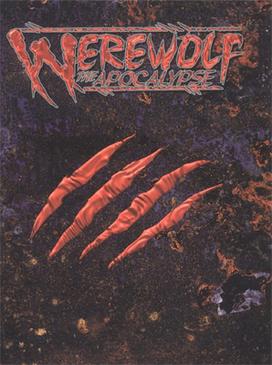
I got sucked into a Werewolf: the Apocalypse game, and really enjoyed it, and I played a little Vampire and a little Mage as well. My RPG tastes began to grow, and I started buying other games, surprised that there were dozens of games put out by a wide variety of publishers in any genre you could think of. And of course, this was the late '90s, when the Internet gave us the ability to communicate around the world and share documents online with each other, enabling the explosion of what is commonly known as the "indie gaming" revolution. New voices emerged in the industry, edgy people with games that strayed far from the staid boundaries of D&D, GURPS, Rifts, World of Darkness, and other, more established platforms.

Fast-forward twenty years, and the more things change, the more they stay the same. Dungeons and Dragons is now well into its fifth - and most popular - edition, and most of the old guard are still around in one form or another. But smaller, indie presses and self-published games continue to arrive on the scene almost daily. In addition, the disdain most D&D folks had for the 4th edition rules, coupled with the death of D&D co-creator Gary Gygax back in 2008 sparked the "Old School Renaissance", where many gamers went back to the old editions of the game, breathing life back into them and using the bones of their rules sets to create a huge variety of different games.

Over the decades, I've collected a lot of role-playing games. Far more than I ever have, or ever could, play. I don't know what the current number is, but it is probably creeping up towards a hundred different RPGs and/or editions. And yet, that barely scratches the surface of what's out there, even from larger game companies, never mind "indie" developers. It's interesting that Dungeons and Dragons is more popular and more mainstream than it has ever been, and yet, most people have no idea of the immense variety of games out there - settings, play styles, rules types - whatever your interests might be, there is likely a game for you. And, just to give a minuscule taste, here's a YouTube video I watched last night, which dips a toe into the fathomless pool of games out there:


Yes, the video is a bit long, but if you have any curiosity about role-playing games, it is definitely worth your time to watch, and certainly better than me trying to pitch a bunch of different games. Oh, and it is worth noting that of the ten games they mention, I only own one of these - Call of Cthulhu - and it's an old edition. So if I own nearly a hundred RPGs, and only 1 of them is on this list, that gives you some idea of the variety out there.

Friday, August 30, 2019

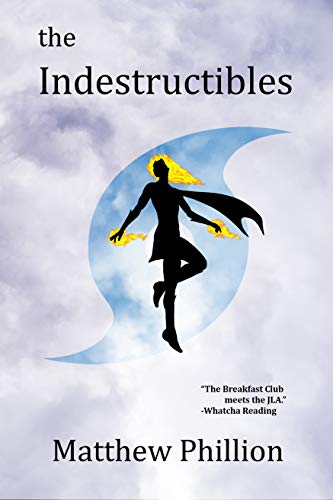
Fiction Friday: Matthew Phillion's THE INDESTRUCTIBLES Series

Although I have, over the years, dabbled in reading comics and following along with various comic book characters, I was never really particularly drawn to the super-hero genre specifically. I preferred characters like The Punisher or Conan the Barbarian, or comic book stories that weren't really super-hero focused, at least in the traditional sense, like the PREACHER series, or WATCHMEN (which has super-heroes, but wow, not so super or so heroic).

All that having been said, with the meteoric rise in Young Adult fiction over the last twenty years, especially as it touches on sub-genres like Urban Fantasy, I've seen several authors out there who tie in YA fiction with more traditional super-hero tropes (Percy Jackson kinda feels like this, although the characters are technically Greek demi-gods, but whatever). Again, this really isn't my cup of tea, so for the most part, I've ignored this genre, feeling it's not really something I find interesting.

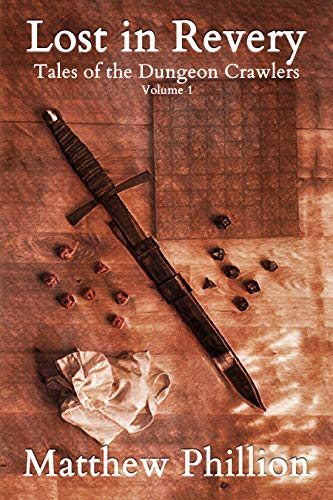
A couple of weeks ago, I decided to give Matthew Phillion's THE INDESTRUCTIBLES a shot. I've been social media pen pals with Matt for a few years, and I've read his DUNGEON CRAWLERS novellas (also highly recommended). I knew he was a skilled storyteller, so I took the plunge, and I read Book 1 of his YA supers series.

To say that I was pleasantly surprised at how good it was is a bit of a slight to Matt, so I will say instead that I was surprised how easy it was for me to slide into the YA superhero genre with this first book. The characters were fun and engaging, and his writing style is clean and evocative, without feeling simplistic or dumbed-down for a younger audience. I have since read books 2 and 3, and I am currently well into book 4. The series currently extends to a fifth book, as well as several associated short stories, and there is a separate two-volume book series that exists in the same world and timeline as the Indestructibles characters.

If you enjoy super-hero fiction, or if you have or know a young adult reader who enjoys this kind of fiction, please go check out Matt's work on Amazon. His books are available in Kindle and paperback formats, and he's also made them available via Kindle Unlimited.

Wednesday, August 20, 2014

Dungeons and Dragons 5th Edition Player's Handbook - First Impressions

After all the waiting and anticipation of a new Dungeons and Dragons edition coming out, I'd completely forgotten that yesterday was the official release date. I'd intended to pick it up via Amazon for 40% off the cover price next month, but found myself near the local hobby store, and made the impulse decision to pick up the book at full price.

I'd only intended to give the book a cursory look last night, but I sat down with it about 6:30 or so, and didn't put it down until after 11:00.

I'm pretty impressed with the production values overall. I like the color of the paper, finding it a lot easier to read than the stark white of 4E, and not as dark (although I have to check) as 3E. The font is nice and readable even for me, and I like the use of Serif and Sans Serif fonts in certain places. A lot of thought was put into the overall typography and layout of the book, and it shows.

It took a bit, but I'm now completely sold on the artwork. I was never a fan of the 3E/4E art direction, finding it way too cartoonish and/or comic-bookish. There's nothing wrong with that on its own, but for a game that's supposed to be highly universal in the tones and settings it is applied towards, I think the overall look was too specific. The new art, on the other hand, does a good job of looking ahistorical, while at the same time, grounded in a "fantastical reality" - people actually look like people, creatures like actual creatures, and so forth. Art is terribly subjective and many will disagree with me, but I think it fits a perfect balance of the fantastical and the realistic, reminding me of some of the better 1E and 2E color art from back in the day (which, nostalgia aside, varied WIDELY in quality). Also, it was really great to see a lack of cheesecake art - no chain-mail bikinis or exaggerated "boob-plate" armor. All depictions of the female form were tasteful and again, grounded in a balance of fantasy and reality. This was a big win for me, as I feel it gives a very positive view of female PCs as something other than Black Widow-esque sexy femme fatales or nearly nude magical pixie maidens.

After a single skim through the whole rulebook, I spent most of my time reading the character creation material. I like the balance of the races and classes, some minor quibbles aside. Halflings are now much disengaged from their Hobbit origins, which is I suppose smart, but may alienate some purists. The Dragonborn and Tiefling races don't interest me at all, but since they are carry-overs from more recent editions, and I suppose were middilingly popular, I have no strong feelings either way. I suppose after 40 years, there's room for some original races! I also like that there's a lot of callbacks to how different D&D settings handled differences in the races, as well as discussions on how each race sees itself and other races interacting within the generic campaign setting framework.

As for classes, it was interesting to see how many and to how much of a degree characters have access to spells. Three different "arcane" classes, as well as Bards, Paladins, and Rangers getting much beefier spellcasting abilities (at least, as compared to what I remember). I might go so far as to say the pendulum has swung too far in giving too much access to spellcasting, but as so many multiclass combinations had to do with adding magic to a class, I suppose it makes sense.

I do feel as if the career paths start a little early at 3rd level, but in earlier editions by that point players already had a pretty firm grasp of what they wanted for their character. For the most part, I feel the paths are most reminiscent of 2E class kits, and while some of those back in the day were a little lame, others were really colorful and added a lot to the build. I've seen people complain that the paths are too binding, i.e., "Why can't I play just a plain old vanilla Fighter?", and I'm going to go out on a limb and guess the answers for this question - and many more - are to be found in the DMG.

There's a bunch more to comment on, but overall I'm definitely liking what I see. I felt 3E was too crunchy and bean-county for "Dungeons & Dragons", although I liked the move to a unified mechanic and a more modern (for the time) RPG design approach. I had little love for 4E, finding its attempt to make a tabletop RPG into a weird board game / video game just unappealing to my own personal sensibilities. 5E actually feels a lot like a blend of Castles & Crusades and Pathfinder, two games that were very well received, and I think overall that was a smart design choice. This game FEELS like "Dungeons & Dragons" should feel to me, after 40 years of game evolution.

Monday, January 27, 2014

A Writer's Sandbox: Dungeons and Dragons Turns 40 and Keeps on Rolling

Where it all started
Twenty years ago, I began playing Dungeons and Dragons. For the longest time, I had almost no interest in Fantasy as a genre, preferring Tom Clancy or Able Team or some dog-eared Vietnam memoir. But my friend Joey loaned me the first three Dragonlance novels, and I was weirdly hooked.

That of course is a real signifier as to the fact that I'm not an "old school" D&D gamer. many of them consider the mid-80's advent of the Dragonlance media tie-in fantasy novels, and the game setting they're based on, to be the game's true death-knell. To many, taking the game away from the small, grubby stories of treasure hunters and scoundrelous tomb-robbers and featuring epic, save-the-world style quests with Good and Evil standing against each other was anathema to what the game was all about.


Unfortunately for these grumbly grognards, this newer kind of gameplay not only became popular, it became, in a way, the de facto sort of game played by D&D groups. A ragtag band of heroes - a fellowship, if you will - comes together to take on a quest to defeat some ancient evil that threatens the land. As the characters grow in experience and become more badass, the threats they encounter likewise become more terrible, almost as if some higher power were making sure they were challenged, but not too challenged, in their adventures...

But that's a whole other article for another day.

Let's be honest. This is badass.
The summer of 1993, Joey and our friend Josh both brought over the "Big Black Box" version of the Basic D&D game, and my life changed forever. Although looking back on it we didn't actually game that much, I was immediately captivated by this thing, this systematic framework around which you could create characters and worlds and adventures. My interest in D&D quickly outstripped theirs, and within two years I'd bought almost every rule book and supplement published for what was then the second edition of Advanced Dungeons & Dragons (D&D would drop the "Advanced" after this edition, as by this time there was no real Basic vs. Advanced rules breakdown). I also bought a ridiculous amount of D&D media tie-in novels, most of which I've not cracked again in almost two decades (mostly because, frankly, a lot of them weren't that great).

For years before this, I'd been an amateur writer, penning or typing stories, usually (okay, always) of a violent nature. It was a perfectly healthy reflection of all the violent crap I read at the time, and when I started getting into D&D, I started writing fantasy stories as well. A lot of people take potshots at gaming fiction, painting those who play the game and build adventures as frustrated writers who can't actually commit to writing their own original material. While there is no doubt some merit to this, I actually think that gaming and writing can go hand in hand and be mutually supportive.

This is some epic-level shit going down.

I realize now, engaging in the world-building of creating a campaign setting, the D&D player is learning the same tools that writers need in order to flesh out the "worlds" they write, even if those worlds are historical or contemporary to the writer. You learn how to build characters, give them motivations, connect story lines and look back at the origin of a conflict, as well as forward to the inevitable resolution. You think of infrastructures and consequences, creating mood and drama, finding themes and setting tone.  You learn how to challenge your protagonists, and to make sure that the scale of the challenges they face falls within the sweet spot of tough enough to make things exciting and worthwhile, but not so hard that everyone gets slaughtered, or some deus ex machina is needed to pull everyone's bacon out of the fire. You learn that when a character dies, all the player (aka, reader) asks is that they die well, with a bloody sword in hand and a pile of foes all around. And when the bad guy gets his comeuppance, it's satisfying and worth all the trials and tribulations that came before.

So here's to you, Dungeons and Dragons. Forty years and still going strong, the grandfather of all role-playing games - including most modern video games - and the sandbox where so many writers created their first stories.