Showing posts with label role-playing games. Show all posts

Wednesday, March 10, 2021

New Release: THEY KILL FOR GOLD

So, my first new book is out, a fantasy novella that plays heavily into the 80's style, tabletop fantasy role-playing games media tie-in novel fiction vibe. I'll cut-and-paste in here the Author's Note I wrote for the end of the book: 

I discovered tabletop role-playing games in 1993, when two of my friends acquired the “Big Black Box” edition of a certain “Basic” fantasy RPG which will remain nameless. My enthusiasm for tabletop gaming quickly outgrew theirs, and since I lived in a very rural part of Maine and didn’t have many friends who lived close by, I turned my interest in writing - which was very strong in me even as a teenager - towards an interest in gaming, specifically the world-building and character-creating aspects of it. I didn’t have much of an opportunity for playing adventures, so I filled my time by creating adventure stories.

Fast-forward a quarter of a century. I still play that certain role-playing game in its current edition, although now in the winter of 2021 my friends and I play it over video chat, because the COVID-19 pandemic is keeping us from hanging out together as we always did, laughing and teasing and bringing meals and having drinks. I’m a big nerd and most of my friends are big nerds as well, and this is one of the pastimes that keeps us together, some of us since the late-’90s. We’ve gotten older, some of us a little rounder, all of us a little greyer up top, but when the books and the dice and the character sheets come out, we’re all still kinda kids again.

This past year has been terrible on a global scale. The pandemic is far from over, all our lives have been on hold in one way or another for a year. We still try to get together online a couple of times a month to fight bad guys and go exploring, discover hidden places and earn fame and fortune in imaginary lands. It’s an old-fashioned style of play, and I try as the Game-Master to make sure the more problematic aspects are left out of the adventures. Still, we’re traditionalists in many ways. 

And so, this is what THEY KILL FOR GOLD is about. It’s a story of old-school fantasy adventure, hearkening back to those memories of a more “Basic” kind of game and gameplay. The plot isn’t fancy, the world isn’t unique or exceptional, the character motivations aren’t all that complicated. And yet, I enjoyed writing the story and bringing these characters to life. Hopefully, you enjoyed reading it. Maybe it’ll inspire you to go dig around in a drawer, find your dice, dust off your old rulebook and some graph paper, and go on an adventure.

So far, I've seen a slow but steady trickle of sales, and more interestingly, Kindle Unlimited "borrows" and reads. Very encouraging, as I haven't released anything in two years and this has gone out with very little fanfare. I already have an outline for the second book, and I am developing the story for the third. All in all, I think the idea of simple, fast-paced novellas that draw really heavily on old-school fantasy gaming tropes, but with a modern touch, may in fact find an audience with readers. I've gotten some really positive feedback from a couple of readers already, folks who know the genre I'm trying to fit into and whose opinions I definitely respect, and so that is extremely encouraging.

That's it for now, If you think this sounds interesting, you can click here to find the ebook on Amazon. A paperback edition should be along in a few weeks.

Wednesday, October 2, 2019

Wargaming Wednesday: The Beards and Battleaxes RPG?

Cover art from one of the GW army books
Hello everyone, sorry for a lack of posts Friday and Monday, things were a little troubled on the home front. But here we are again, talking about gaming. After venting my frustration last week, I began thinking of a gaming project I could undertake, something simple, specific, and entertaining to me personally, while at the same time, viable as a product that can be shared to folks out there in the world at large.

So I settled on a game about dwarves.

I like dwarves. I've played them in various RPGs. The Dwarfs (not Dwarves, but Dwarfs) were my first Warhammer Fantasy Battle army. They're short, stout, and bearded, just like me, and although beer isn't my go-to form of alcohol these days, I can certainly appreciate a well-brewed pint of ale or stout. Dwarves are also usually portrayed as gruff, curmudgeonly little assholes who don't like taking shit from anyone and hold grudges far longer than rationally reasonable, and yes, guilty as charged on all counts.

A single player-race game might seem limiting, but it is also focused. It lessens the number of decisions during character creation and reduces the rules and word count, keeping the game tighter. Also, I would probably stick with tradition and limit any form of Dwarven magic to a kind of rune-crafting, coupled with perhaps some kind of holy boons or blessings from Dwarven gods. Again, it limits player choice, but also alleviates the need for a player-side spell catalogue (which in many games can be equivalent to all the other rules put together).

From a GW Dwarf infantry minis box
As for adventures, I think a lot of the major bases can be covered. Dungeon and underground exploration is an obvious go-to, but you can also have dwarves patrolling the areas around their strongholds, overland expeditions, trips to human (or non-human) lands and cities, long-distance explorations, diplomatic trips, monster hunts...with a little thought, almost any adventure type is possible.

As for the rules, I think I have a good foundation I want to build upon. Originally I thought of going with the core rules I developed for my stalled-out Tankards & Broadswords RPG, but I think for the moment I am going to set those aside and try something a little more basic, and if that doesn't seem to fit my needs, we'll reconsider. I think the rules should be simple, avoid a lot of math, and most difficult of all, not be just a generic system but an expression of the concept of the game. How we get there, we'll have to find out.

So, I'm going to leave this be for now. Next week I hope to have a few more details on this, and as time goes on, we'll build bit by bit. In the end, this is likely just going to be a downloadable PDF that anyone can enjoy, so we're keeping it as simple and straightforward as possible.

Wednesday, September 25, 2019

Wargaming Wednesday: Nine Novels, Zero RPGs

Old Cover Draft from Wayyyy Back When
Going to cut and paste in a series of posts from Twitter that I wrote this weekend. Every year or so, I get this notion of "finally" finishing a small role-playing game product that I can let out into the wild. I don't think I'd sell it, just create a PDF that's available for download, perhaps put a print-on-demand version on Amazon for as cheaply as they'll let me. But year after year, it doesn't happen, and I got thinking about why recently:
I've blogged about it in the past, but it is very strange for me to face that I have written nine novels and many shorter works of fiction, but the thought of putting out a short role-playing game product is vastly more nerve-wracking. 

I've been gaming since '93 and writing for profit since 2011. I ran campaigns with several homebrew RPG systems over the years, and tinkered with probably a dozen more system ideas. Yet, I have never had the nerve to finish a gaming product, package it, and put it out there.

At first I thought it was fear of criticism, but being a novelist beats that out of you pretty quickly. Maybe it's knowing that most readers just consume your product and move on, but so many gamers I know are system-tinkerers. It's like running a restaurant where half your customers are also running their own restaurants. Every single person who buys it is going to be deciding whether they could have done this better than you, and how.

Because that's the nature of RPGs. And that's fine, except that means not just criticism, but active, in-depth critique. No 4* reviews on Amazon "Fun read but the action was a little confusing". You have to defend every rule and every wording against everyone who reads it.

And to have that level of exhausting engagement, and so much of my time dedicated to a project that'd probably earn me 1% of what a novel would (if I even put it out at a price, which I probably wouldn't) just seems...not worth it.

Which kind if sucks, because I love role-playing games, and I have been a tinkering game designer for 25+ years. But the meat grinder which is that middle-aged person's algorithm of time, money, and energy vs reward is difficult to overcome.
I wrote a post about this back in 2015 on my Tankards and Broadswords blog (click to go there and read it, it's still relevant). It's funny that in the last four years, despite continued tinkering, I still don't have any kind of RPG product to share. I'm fully aware that the skill set of "Game Designer" and "Novelist" only partially overlap, but I think that is only a small portion of the problem. So, we shall see. I've got a few ideas, and I feel like if I can start small enough, I can build on a little idea incrementally. Only time will tell.
   

Friday, September 20, 2019

Fiction Friday: The Stonehaven League LitRPG Series

The "LitRPG" genre of fiction is...a weird one. It's not actually that new, however. The premise is that these stories revolve around characters who exist within a "game world", i.e., a world that is artificial and created as part of a game. The degree of artificiality in LitRPG stories can be very obvious, or the world can feel completely real, but still exist only as a result of some kind of game.

The first novel that I know of which seems to fall into this kind of genre, although it wasn't called LitRPG at the time, was Andre Norton's 1978 novel Quag Keep, a story about a bunch of adventurers in a medieval-type world who are actually people from Earth who were playing a role-playing game. Given that Dungeons and Dragons was roughly four years old at the time Quag Keep was published, Norton got on the bandwagon fairly early. Many others have followed over the years, one of the most notable being Joel Rosenberg's Guardians of the Flame series, which started in 1983 with The Sleeping Dragon. Beyond the written word, one would consider the '80s Dungeons and Dragons cartoon series to be a form of this kind of genre, as would, I feel, the movie TRON.

But the modern form of the LitRPG novel is more commonly based around computer games, and more specifically, not people transported to worlds, but rather, immersed in them through play. As virtual reality is more common these days in gaming (and is growing bigger every day), the idea of putting on VR gear and submerging yourself as your character in a game world is very real. In fact, Ready Player One  is a perfect example of this.

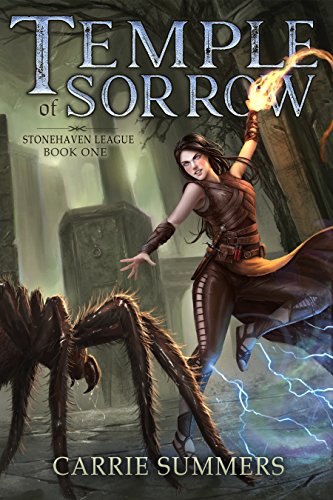
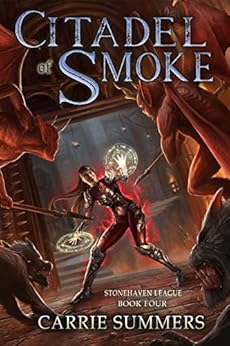
Enough background, though. Author and former (?) game developer Carrie Summers has written an engaging series of LitRPG / GameLit novels, which in the "real world" are set a few decades in the future, where virtual reality gaming has extended all the way to cybernetic implants that dump the virtual reality of the game right into our brain's perception of reality. In her first book, Temple of Sorrows, a young woman named Devon leaves her crappy job to work as a kind of "super-tester" for a gaming company, Relic Online, in order to push the game and it's artificial intelligence to the limits of what a capable, creative player can do.

Devon logs into the game, stunned at how the direct neural connection to the game world seems so incredibly real - she can feel the wind and the sun, the grass under her feet and the cloth of her clothing. Yet, the world still acts as a Computer Role-Playing Game. She has skills and abilities and she gains experience and levels up. When she kills a monster, the touch of a blade turns the monster's body into "loot" that can be used for other things. Anyone who has played a computer RPG in the last...twenty years or so will be familiar with the tropes of the world and its setting.

I don't want to give the plot away, but suffice to say, there is plenty going on in both the real world and the in-game world. This leads to dangers on both sides for Devon, something that I found interesting as it kept the story from being completely about her adventures in-game, and raised the stakes a little. And while this book is probably perfectly fine for a YA audience, there is a good deal of violence going on, so those who want action will get that, while those who like the puzzle-solving and "game-ness" of a game world will also have something to look forward to.

Overall, this is an enjoyable series. If I remember right, I've read the first three books, and I am just starting the fourth. with six books currently in the series. These books are all available in Kindle (for purchase or Kindle Unlimited) and paperback, and the first four are currently available as audiobooks. If this seems in any way interesting to you, I definitely recommend checking them out.

Friday, September 13, 2019

Fiction Friday: THE LAST WISH: Introducing the Witcher

If you follow video gaming at all, you've likely heard of The Witcher series of open-world RPG video games. They feature the monster-hunting Witcher, Geralt of Rivia, wandering the world and killing that which goes bump in the night. The world of the Witcher is based around Slavic folklore, a flavor of Western monster mythology that is a little removed from what most of us are used to unless you are really into the subject of bestiary folklore.

But fewer people realize that the Witcher and his world started out as a series of short stories and novels by Polish author Andrzej Sapkowski. Most of the stories were written in the 1990s, but it wasn't until the mid-oughts and later that they were given English translations. Coming at the end of this year, Netflix is releasing a television series based around the stories, and of course both fans of the books and the video games are howling over how the details shown in the trailer don't do the series justice.

Curious about both such a popular video game character and what might drive Netflix to pick up the IP, I grabbed the first (chronologically) anthology of short stories, THE LAST WISH. I was immediately hooked. For a book translated from a different language, the prose is evocative and pulls you right into the world, a very dark, late medieval-era feeling fantasy realm, very similar to the Ravenloft setting of Dungeons & Dragons. If you aren't familiar with Slavic folklore, some of the creatures might seem unusual to you, but that slightly alien nature just adds to the creepiness of the setting - this isn't some adventurer going after your usual orcs and goblins, this is a true monster hunter, for whom a blend of swords, sorcery, and dark knowledge is needed to take on the evils lurking in the deep forests and crumbling towers.

So if you like dark fairy-tale fantasy with an Eastern European bent to it, do yourself a favor and check out Sapkowski's fiction. I'll definitely find time this fall to work my way through more of Geralt's adventures.

Friday, September 6, 2019

Fiction Friday: The Original Dragonlance Chronicles Trilogy

Just a quick post today as I wrap up a busy work week. I cribbed this off of my Facebook feed in response to a Tor Books post about the original "Chronicles" Dragonlance tie-in novels, and how formative those novels were to a generation of role-playing gamers and fantasy enthusiasts. For many folks (myself included) we read these books before Conan or Lord of the Rings.

You can read the Tor.com article here.

No joke, I think the author stole the memories of my early teenage years and used them to write this piece. Until maybe my sophomore year of high school, I'd always eschewed fantasy and science fiction in favor of shoot 'em up men's adventure and espionage thrillers, until one day a classmate of mine loaned me these three books. This was at least a year before I first played Dungeons & Dragons, and long before I tried reading The Hobbit or Lord of the Rings. I still have my original three paperbacks, bought after reading this for the first time almost 30 years ago.

After getting into D&D, I did buy the second edition "Tales of the Lance" boxed set, although I never did play it. Frankly, I feel like it isn't really superior to the Dragonlance Adventures hardcover for 1E that came out in the '80s. I remember seeing this advertised in the back of comic books, before I got into D&D or really understood what it was or how it played. I remember staring at this all the time, thinking it seemed like the most badass thing I could imagine. When I got into D&D later on, I did buy the 2nd edition Tales of the Lance boxed set, but just didn't appreciate it as much as the 1E Dragonlance Adventures hardcover, which I acquired in a used book store my freshman year of college.

It has been years since I re-read the original trilogy. I started re-reading Kindle editions, and while it didn't disappoint, I had read them so many times, knowing what was about to happen meant I eventually started reading something else and didn't get back to it, but yeah, I do want to give 'em another go, although I am a little nervous as to whether they'll hold up or not. It is simply a matter of remembering that they represent fantasy and RPGs at a certain particular point in time, and appreciate them for what they are, instead of criticizing them for what they are not.
 

Wednesday, September 4, 2019

Wargaming Wednesday: Not Just Dungeons and Dragons

Dungeons and Dragons was the first pen-and-paper tabletop role-playing game I ever encountered. I started playing in the summer of '93, when two of my friends had the "Big Black Box" edition of the DnD Basic Rules set. For those of you who know what the BBB version is...well I don't need to tell you anything. For all you newbies out there, this was a really big intro boxed set that had a ton of "rules cards", a big map adventure, tiny cardboard monsters and PCs...basically everything you'd need to play the first few levels of your characters - which is not unusual for the D&D boxed sets - but in a larger format, with full-color maps and cardboard counters.

Up until this point, I really hadn't been into "Fantasy", but I had read the first three Dragonlance books (that's a post for another day), and so I had some idea of what I was getting into. Needless to say, I was immediately hooked - in fact, far more than the two other people I was gaming with. I quickly bought the 2nd Edition Player's Handbook, Dungeon Master's Guide, and Monster Manual, and the over the next few years, I bought EVERYTHING that TSR produced - settings, Class handbooks, DM's guides...the works. The biggest problem, unfortunately, was lack of players, since I was living in a fairly rural small town in Maine, and my high school peers, for the most part, weren't interested in gaming.

When I moved off to college in 1995, I brought most of my gaming materials with me, certain that I'd be able to find a DnD group at a large urban university. But of course, as soon as I found some nerdy brethren and asked who played D&D, I received mocking laughter. "We don't play that game, you dork. We play White Wolf games. Those are real role-playing games".

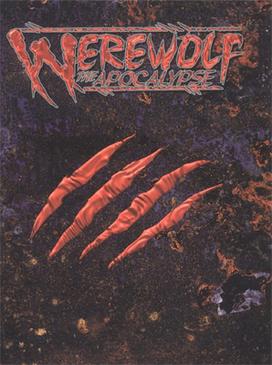
I got sucked into a Werewolf: the Apocalypse game, and really enjoyed it, and I played a little Vampire and a little Mage as well. My RPG tastes began to grow, and I started buying other games, surprised that there were dozens of games put out by a wide variety of publishers in any genre you could think of. And of course, this was the late '90s, when the Internet gave us the ability to communicate around the world and share documents online with each other, enabling the explosion of what is commonly known as the "indie gaming" revolution. New voices emerged in the industry, edgy people with games that strayed far from the staid boundaries of D&D, GURPS, Rifts, World of Darkness, and other, more established platforms.

Fast-forward twenty years, and the more things change, the more they stay the same. Dungeons and Dragons is now well into its fifth - and most popular - edition, and most of the old guard are still around in one form or another. But smaller, indie presses and self-published games continue to arrive on the scene almost daily. In addition, the disdain most D&D folks had for the 4th edition rules, coupled with the death of D&D co-creator Gary Gygax back in 2008 sparked the "Old School Renaissance", where many gamers went back to the old editions of the game, breathing life back into them and using the bones of their rules sets to create a huge variety of different games.

Over the decades, I've collected a lot of role-playing games. Far more than I ever have, or ever could, play. I don't know what the current number is, but it is probably creeping up towards a hundred different RPGs and/or editions. And yet, that barely scratches the surface of what's out there, even from larger game companies, never mind "indie" developers. It's interesting that Dungeons and Dragons is more popular and more mainstream than it has ever been, and yet, most people have no idea of the immense variety of games out there - settings, play styles, rules types - whatever your interests might be, there is likely a game for you. And, just to give a minuscule taste, here's a YouTube video I watched last night, which dips a toe into the fathomless pool of games out there:


Yes, the video is a bit long, but if you have any curiosity about role-playing games, it is definitely worth your time to watch, and certainly better than me trying to pitch a bunch of different games. Oh, and it is worth noting that of the ten games they mention, I only own one of these - Call of Cthulhu - and it's an old edition. So if I own nearly a hundred RPGs, and only 1 of them is on this list, that gives you some idea of the variety out there.

Friday, August 30, 2019

Fiction Friday: Matthew Phillion's THE INDESTRUCTIBLES Series

Although I have, over the years, dabbled in reading comics and following along with various comic book characters, I was never really particularly drawn to the super-hero genre specifically. I preferred characters like The Punisher or Conan the Barbarian, or comic book stories that weren't really super-hero focused, at least in the traditional sense, like the PREACHER series, or WATCHMEN (which has super-heroes, but wow, not so super or so heroic).

All that having been said, with the meteoric rise in Young Adult fiction over the last twenty years, especially as it touches on sub-genres like Urban Fantasy, I've seen several authors out there who tie in YA fiction with more traditional super-hero tropes (Percy Jackson kinda feels like this, although the characters are technically Greek demi-gods, but whatever). Again, this really isn't my cup of tea, so for the most part, I've ignored this genre, feeling it's not really something I find interesting.

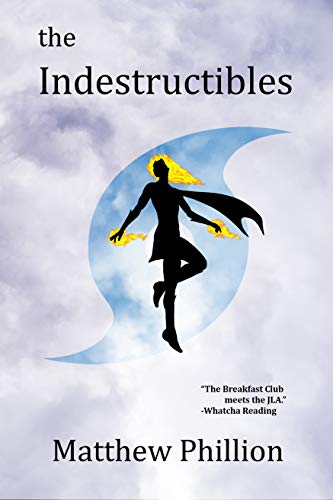
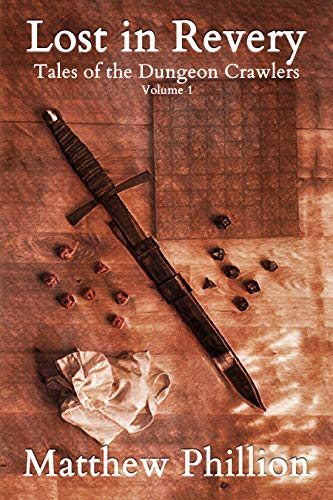
A couple of weeks ago, I decided to give Matthew Phillion's THE INDESTRUCTIBLES a shot. I've been social media pen pals with Matt for a few years, and I've read his DUNGEON CRAWLERS novellas (also highly recommended). I knew he was a skilled storyteller, so I took the plunge, and I read Book 1 of his YA supers series.

To say that I was pleasantly surprised at how good it was is a bit of a slight to Matt, so I will say instead that I was surprised how easy it was for me to slide into the YA superhero genre with this first book. The characters were fun and engaging, and his writing style is clean and evocative, without feeling simplistic or dumbed-down for a younger audience. I have since read books 2 and 3, and I am currently well into book 4. The series currently extends to a fifth book, as well as several associated short stories, and there is a separate two-volume book series that exists in the same world and timeline as the Indestructibles characters.

If you enjoy super-hero fiction, or if you have or know a young adult reader who enjoys this kind of fiction, please go check out Matt's work on Amazon. His books are available in Kindle and paperback formats, and he's also made them available via Kindle Unlimited.

Wednesday, August 21, 2019

Wargaming Wednesday: The Pure Insanity of Warhammer 40,000

Continuing with my push to deliver more blogging content, I'm dedicating Wednesdays to wargaming and role-playing games. Although in recent years I haven't been able to get in much (or really any) of either tabletop wargaming or pen-and-paper RPG playing, I still count both among my hobbies and interests.

Today I just wanted to highlight the wargame I am most invested in on an emotional level - Games Workshop's Warhammer 40,000. For those who don't know what it is - I'll do this REAL QUICK - a bunch of British tabletop miniatures folks had a set of wargaming rules called Warhammer. It had armies of Elves and Dwarfs and guys with swords and pikes, and orcs and goblins, even skeletons and ghouls and "chaos" warriors and monsters. Basically every fantasy trope you can think of circa 1985 or so, thrown into a blender. Warhammer became super popular, and as it grew, they decided to do a version of the game as a sci-fi skirmish game, which they decided to call "Warhammer 40,000".

Just Another Day in the 41st Millennium

The universe of Warhammer 40,000 has changed somewhat in the 30+ years since its inception, but, well, I'll just cut and paste in the quote that appears at the beginning of most of their products:

It is the 41st Millennium. For more than a hundred centuries The Emperor has sat immobile on the Golden Throne of Earth. He is the Master of Mankind by the will of the gods, and master of a million worlds by the might of his inexhaustible armies. He is a rotting carcass writhing invisibly with power from the Dark Age of Technology. He is the Carrion Lord of the Imperium for whom a thousand souls are sacrificed every day, so that he may never truly die.

Yet even in his deathless state, the Emperor continues his eternal vigilance. Mighty battlefleets cross the daemon-infested miasma of the Warp, the only route between distant stars, their way lit by the Astronomican, the psychic manifestation of the Emperor's will. Vast armies give battle in his name on uncounted worlds. Greatest amongst his soldiers are the Adeptus Astartes, the Space Marines, bio-engineered super-warriors. Their comrades in arms are legion: the Imperial Guard and countless planetary defence forces, the ever vigilant Inquisition and the tech-priests of the Adeptus Mechanicus to name only a few. But for all their multitudes, they are barely enough to hold off the ever-present threat from aliens, heretics, mutants - and worse.

To be a man in such times is to be one amongst untold billions. It is to live in the cruelest and most bloody regime imaginable. These are the tales of those times. Forget the power of technology and science, for so much has been forgotten, never to be re-learned. Forget the promise of progress and understanding, for in the grim dark future there is only war. There is no peace amongst the stars, only an eternity of carnage and slaughter, and the laughter of thirsting gods.

Yeah, it's like that. This is the kind of science fiction wargame you dream up when you're a young British nerd who subsists on a diet of heavy metal, Michael Moorcock, Tolkien, the punk aesthetic, European political chaos, Dungeons & Dragons, Star Wars, the Alien franchise, Hammer horror films, and a thick, heady dose of Generation X nihilism.  The "good guys" in the Warhammer 40K universe are the Imperium of Man, but you quickly realize that in 40K, "good" just means not quite as demonically horrifying as the "bad guys", but still pretty goddamn awful. The Space Marines, genetically modified super-humans in a suit of nigh-invulnerable power armor, might be call "the Emperor's finest", but they're also know as "The Angels of Death", and they'd stomp your skull into paste as soon as look at you if they thought you were a threat.

'Ello Guv'ner!
Even the Imperial Guard, the "good little guys" who were just your normal humans in basic body armor and carrying basic guns - somewhat analogous to regular army guys of today, just with sci-fi trappings - are often portrayed as psychotically violent and xenophobic, or just plain insane. Many of them come from "death worlds" where everything there tries to kill you, and it's basically Rambo with a plasma rifle and a chainsaw sword.

Some of my favorite parts of 40K are when things get delightfully subversive. There are nuns in 40K, but they are sociopathic religious zealots running around in black powered armor with all-white hair (white head covering, black outfit, like a nun's habit), blazing away with guns and flamethrowers, slaying heretics and the "impure". The Space Marine chaplain isn't a kindly older man giving you spiritual guidance...well okay he is, but he's also an eight foot-tall crazed murder machine in coal-black armor with a skull-shaped helmet, smashing people to pieces in the name of the Emperor and driving on the troops with his "inspiring presence". Yeah, it's like that. Even the Librarian is a force to be reckoned with, as "Librarians" are actually Space Marines with psychic powers, who can blow your body apart with their minds, set tanks on fire, and cause all sorts of supernatural havoc.

Yes, this is one of the Good Guys.
If anything, my biggest criticism of 40K in recent years is that they seem to be toning down the darker, more punk-rock elements of 40K in favor of something a little more family-friendly. There are still demons and mutants and heretics, but the Good Guys are a little more Good and the Bad Guys are a little more Bad. While 40K has always bee appealing to teenagers, I think Games Workshop knows that they need to aim for a younger audience, in order to get brand loyalty at an earlier age *and* tap into the "toy money" of the parents, rather than 30- or 40-somethings who have discretionary income, but who can also say "$35 for a single model an inch and a half tall? Ehhh...".


And that's my other big complaint - the cost. New model kits and new pricing structures mean that a playable, "competitive" army can set you back $400 or more if you buy everything at store prices. Sure, hobbies can be expensive, but the nature of wargaming is such that you feel the need to buy the newest, coolest stuff, as the rules and the "meta" changes to give different armies an advantage.

Glorious Old-School '90s Boxed Set Artwork!

But despite these problems, I really like the universe of Warhammer 40,000. It's cruel and violent and cynical and bloody as hell - in fact, it reminds me of that other British dystopian setting, JUDGE DREDD, in a lot of ways - but back in its earlier times, 40K didn't take itself as seriously as it does now, and I think the new, more serious 40K has lost a little something because of that.

Now, pardon me while I go burn some heretics - I mean, search on eBay for an out of production miniature...

Wednesday, August 20, 2014

Dungeons and Dragons 5th Edition Player's Handbook - First Impressions

After all the waiting and anticipation of a new Dungeons and Dragons edition coming out, I'd completely forgotten that yesterday was the official release date. I'd intended to pick it up via Amazon for 40% off the cover price next month, but found myself near the local hobby store, and made the impulse decision to pick up the book at full price.

I'd only intended to give the book a cursory look last night, but I sat down with it about 6:30 or so, and didn't put it down until after 11:00.

I'm pretty impressed with the production values overall. I like the color of the paper, finding it a lot easier to read than the stark white of 4E, and not as dark (although I have to check) as 3E. The font is nice and readable even for me, and I like the use of Serif and Sans Serif fonts in certain places. A lot of thought was put into the overall typography and layout of the book, and it shows.

It took a bit, but I'm now completely sold on the artwork. I was never a fan of the 3E/4E art direction, finding it way too cartoonish and/or comic-bookish. There's nothing wrong with that on its own, but for a game that's supposed to be highly universal in the tones and settings it is applied towards, I think the overall look was too specific. The new art, on the other hand, does a good job of looking ahistorical, while at the same time, grounded in a "fantastical reality" - people actually look like people, creatures like actual creatures, and so forth. Art is terribly subjective and many will disagree with me, but I think it fits a perfect balance of the fantastical and the realistic, reminding me of some of the better 1E and 2E color art from back in the day (which, nostalgia aside, varied WIDELY in quality). Also, it was really great to see a lack of cheesecake art - no chain-mail bikinis or exaggerated "boob-plate" armor. All depictions of the female form were tasteful and again, grounded in a balance of fantasy and reality. This was a big win for me, as I feel it gives a very positive view of female PCs as something other than Black Widow-esque sexy femme fatales or nearly nude magical pixie maidens.

After a single skim through the whole rulebook, I spent most of my time reading the character creation material. I like the balance of the races and classes, some minor quibbles aside. Halflings are now much disengaged from their Hobbit origins, which is I suppose smart, but may alienate some purists. The Dragonborn and Tiefling races don't interest me at all, but since they are carry-overs from more recent editions, and I suppose were middilingly popular, I have no strong feelings either way. I suppose after 40 years, there's room for some original races! I also like that there's a lot of callbacks to how different D&D settings handled differences in the races, as well as discussions on how each race sees itself and other races interacting within the generic campaign setting framework.

As for classes, it was interesting to see how many and to how much of a degree characters have access to spells. Three different "arcane" classes, as well as Bards, Paladins, and Rangers getting much beefier spellcasting abilities (at least, as compared to what I remember). I might go so far as to say the pendulum has swung too far in giving too much access to spellcasting, but as so many multiclass combinations had to do with adding magic to a class, I suppose it makes sense.

I do feel as if the career paths start a little early at 3rd level, but in earlier editions by that point players already had a pretty firm grasp of what they wanted for their character. For the most part, I feel the paths are most reminiscent of 2E class kits, and while some of those back in the day were a little lame, others were really colorful and added a lot to the build. I've seen people complain that the paths are too binding, i.e., "Why can't I play just a plain old vanilla Fighter?", and I'm going to go out on a limb and guess the answers for this question - and many more - are to be found in the DMG.

There's a bunch more to comment on, but overall I'm definitely liking what I see. I felt 3E was too crunchy and bean-county for "Dungeons & Dragons", although I liked the move to a unified mechanic and a more modern (for the time) RPG design approach. I had little love for 4E, finding its attempt to make a tabletop RPG into a weird board game / video game just unappealing to my own personal sensibilities. 5E actually feels a lot like a blend of Castles & Crusades and Pathfinder, two games that were very well received, and I think overall that was a smart design choice. This game FEELS like "Dungeons & Dragons" should feel to me, after 40 years of game evolution.

Monday, January 27, 2014

A Writer's Sandbox: Dungeons and Dragons Turns 40 and Keeps on Rolling

Where it all started
Twenty years ago, I began playing Dungeons and Dragons. For the longest time, I had almost no interest in Fantasy as a genre, preferring Tom Clancy or Able Team or some dog-eared Vietnam memoir. But my friend Joey loaned me the first three Dragonlance novels, and I was weirdly hooked.

That of course is a real signifier as to the fact that I'm not an "old school" D&D gamer. many of them consider the mid-80's advent of the Dragonlance media tie-in fantasy novels, and the game setting they're based on, to be the game's true death-knell. To many, taking the game away from the small, grubby stories of treasure hunters and scoundrelous tomb-robbers and featuring epic, save-the-world style quests with Good and Evil standing against each other was anathema to what the game was all about.


Unfortunately for these grumbly grognards, this newer kind of gameplay not only became popular, it became, in a way, the de facto sort of game played by D&D groups. A ragtag band of heroes - a fellowship, if you will - comes together to take on a quest to defeat some ancient evil that threatens the land. As the characters grow in experience and become more badass, the threats they encounter likewise become more terrible, almost as if some higher power were making sure they were challenged, but not too challenged, in their adventures...

But that's a whole other article for another day.

Let's be honest. This is badass.
The summer of 1993, Joey and our friend Josh both brought over the "Big Black Box" version of the Basic D&D game, and my life changed forever. Although looking back on it we didn't actually game that much, I was immediately captivated by this thing, this systematic framework around which you could create characters and worlds and adventures. My interest in D&D quickly outstripped theirs, and within two years I'd bought almost every rule book and supplement published for what was then the second edition of Advanced Dungeons & Dragons (D&D would drop the "Advanced" after this edition, as by this time there was no real Basic vs. Advanced rules breakdown). I also bought a ridiculous amount of D&D media tie-in novels, most of which I've not cracked again in almost two decades (mostly because, frankly, a lot of them weren't that great).

For years before this, I'd been an amateur writer, penning or typing stories, usually (okay, always) of a violent nature. It was a perfectly healthy reflection of all the violent crap I read at the time, and when I started getting into D&D, I started writing fantasy stories as well. A lot of people take potshots at gaming fiction, painting those who play the game and build adventures as frustrated writers who can't actually commit to writing their own original material. While there is no doubt some merit to this, I actually think that gaming and writing can go hand in hand and be mutually supportive.

This is some epic-level shit going down.

I realize now, engaging in the world-building of creating a campaign setting, the D&D player is learning the same tools that writers need in order to flesh out the "worlds" they write, even if those worlds are historical or contemporary to the writer. You learn how to build characters, give them motivations, connect story lines and look back at the origin of a conflict, as well as forward to the inevitable resolution. You think of infrastructures and consequences, creating mood and drama, finding themes and setting tone.  You learn how to challenge your protagonists, and to make sure that the scale of the challenges they face falls within the sweet spot of tough enough to make things exciting and worthwhile, but not so hard that everyone gets slaughtered, or some deus ex machina is needed to pull everyone's bacon out of the fire. You learn that when a character dies, all the player (aka, reader) asks is that they die well, with a bloody sword in hand and a pile of foes all around. And when the bad guy gets his comeuppance, it's satisfying and worth all the trials and tribulations that came before.

So here's to you, Dungeons and Dragons. Forty years and still going strong, the grandfather of all role-playing games - including most modern video games - and the sandbox where so many writers created their first stories.

Tuesday, January 7, 2014

SPIDERS AND FLIES Sword and Sorcery Fantasy Novella On Sale Now


http://amzn.com/B00HNY0H9U
Click the Cover to See on Amazon

Every writer has their “desk-drawer novel” written once upon a time but never brought out to see the light of day or the eyes of other readers. Spiders and Flies is my desk-drawer novel, or novella, rather, written in the spring and summer of 2001 as a means of establishing in my mind a world that would eventually become a role-playing game campaign setting. That campaign, which I named Year of the Blood Wolf, was one of my favorites as a game-master.

At the time, I wrote Spiders and Flies as an homage of sorts to the classic pulp tales of writers such as Robert E. Howard, Lin Carter, Karl Edward Wagner, and Gardner F. Fox. I wanted to create an exotic world of danger and adventure, swordplay and sorcery, hidden terrors and long-forgotten treasures. I wanted characters who lived somewhere in the grey area between hero and scoundrel, daring rogues who’d risk their lives for the thrill of adventure. 

Looking back on this story twelve years later, I’d like to think I’ve succeeded at that goal, although I leave it to the reader to decide on whether or not I was successful. Either way, I’m glad to be able to take this story out of the desk drawer, so to speak, and publish it at last.

Here's the product description for Spiders and Flies:
In a shady border-town tavern, the swordsman Rovan conspires with his old comrade Arvik Red-Hand to carry out a daring plan to pay off a blood-debt: ride deep into the desert and loot the abandoned temple of a long-dead spider god.

When old enemies come to collect Arvik's head, he and Rovan are rescued by Marquia, a mysterious sorceress, and Souvri, a cunning thief. Believing the two could prove valuable, Arvik and Rovan share the plan with their rescuers, who agree to join the adventure - for a healthy share of the spoils.

The four treasure-hunters face danger on every step of their journey, and finally they discover the spider god's temple might not be abandoned after all...

SPIDERS AND FLIES is a 20,000 word novella, written as an homage to classic Sword & Sorcery pulp fantasy stories filled with magic and monsters, thievery and swordplay, hidden horrors and forgotten treasures.
I'm working on the paperback version of S&F, which should be out in the next week or so. When it is, I'll let folks now.

Friday, October 11, 2013

Movie Review: The 13th Warrior (1999)

Recently, I popped this movie in the DVD player and gave it a viewing for the first time in a year or two (I've probably watched it over a dozen times, however). My objectivity surrounding The 13th Warrior, I'll admit, is somewhat shaky. Okay...it's pretty much non-existent. A few of you out there who know me were there, that fateful summer day in August of '99, when we went to see this at the Cheri theater downtown as a matinee. At the time, the main hall of the Cheri was probably one of the biggest, if not the biggest, screen in Boston proper, and so this movie was definitely given a real "cinematic" presentation. I'll always maintain that certain movies need to be seen on the big screen, in the theater, and even today's mega-televisions and home theater sound systems don't compare to what a real movie theater can provide. Perfect evidence of this was when I saw Conan the Barbarian in the theater for the first time about six years ago, and my already favorite fantasy movie suddenly became one of my greatest cinematic experiences, period.

But I digress. The 13th Warrior is adapted from the Michael Crichton novel, Eaters of the Dead, which was in turn his attempt at writing a "historical" interpretation of Beowulf, using some fake "found documentation". Written in 1976, it was one of his earlier novels, written way before Jurassic Park, when he was just another writer turning out cool books in various genres. The premise, in a sentence or two, is that the story follows an Arab diplomat as he gets caught up with a band of Viking badasses as they venture far into the hinterlands of Scandinavia to do battle with a horde of, to put it simply, cannibalistic Neanderthals. Crichton uses the cave-dwelling, fire-toting savages as the stand-in for Grendel, the Dragon, and Grendel's Mother.

Right there is the first problem - when you explain the plot of the film, it sounds a lot dumber than it is. there's a great deal of superstition and mystery surrounding the "Wendol" as they are known, and the Vikings all believe them to be actual supernatural creatures, a race of legendary were-bear creatures that are half man, half beast, lurking in the deep forests and appearing in the night with the mist, to raid and kill and make off with the heads of dead men, and most disturbingly, "...it is said...they eat the dead...". Thus, the name of the book.

The movie also had a very difficult birth. John McTiernan started directing it, and then there were severe creative differences between him and Creighton, to the point where McTiernan left and Crichton finished directing the film (at this point Crichton had already directed a successful film, so this wasn't necessarily a dumb decision on the part of the studio). The movie does exhibit a kind of mixed personality disorder; it doesn't know if it should be horrifying and scary, or more straight action-adventure. The Vikings are also very..."Mythical" is how I like to put it. All the badasses wear armor and clothing that come from a wide range of cultures and time frames, many of them anachronistic. There were a LOT of people who tore the movie apart on this factor alone. I look at it as simply representing the Vikings as widely traveled adventurers, who've been to a lot of different, exotic locales.

In addition, there is the infamous "I listened!" language montage. If you're actually paying attention, it is pretty clear that Antonio Bandaras' character is spending weeks traveling with the Vikings, and as an educated man who probably speaks a couple of languages already, he over time picks up bits and pieces of the Viking's language, until he surprises them by being able to speak their tongue pretty well. Many folks thought this process took a couple of days, perhaps as short as a single night, which isn't really supported by the montage unless you're not really paying attention. Ultimately, it is a gimmick to get around a language barrier that would've killed the story before it even began (not that some critics would be upset by that). Ultimately, I think it is fine; if the Stargate television series can get away with EVERYONE IN THE UNIVERSE speaking perfectly understandable English, then I think we're okay here.

Beyond these and some other criticisms of varying merit, I think this movie is flat out one of the best historical action-adventure movies of the last twenty years. The Viking Band is so perfectly cast, so well-populated with these tough, gritty, steely-eyed asskickers. The dialogue might be a little hammy, but it is so well-suited to the badassitude of the movie that it just plain works. A few quotes snagged from IMDB:

Herger the Joyous: When they come, we form a circle in the center of the room, backs to one another.
Ahmed Ibn Fahdlan: I am not a warrior.
Herger the Joyous: Very soon, you will be. 

Ahmed Ibn Fahdlan: Have we anything resembling a plan?
Herger the Joyous: Mm-hm. Ride till we find them... and kill them all. 

Buliwyf: I have only these hands. I will die a pauper.
King Hrothgar: You will be buried as a king.
Buliwyf: A man might be thought wealthy if someone were to draw the story of his deeds, that they may be remembered.
Ahmed Ibn Fahdlan: Such a man might be thought wealthy indeed.

I also want to emphasize that, although this movie at some points isn't sure if it wants notes of horror or pure adventure, in many ways, it is still a good blend. The Wendol, until you get what they are later on, are a creepy, evil, almost goblin-esque race that hide in the shadows and "come in the mist". It isn't until about halfway through the movie that the characters can confirm that their opponents are simply men who dress and think of themselves as bears. The dark, misty, foreboding nature of the landscape, as well as the more disturbing scenes inside the caverns of the Wendol also contribute to the eerie quality of the movie, as does Jerry Goldsmith's incredible score. In fact, for years I used the soundtrack as tabletop role-playing game "mood music" because it just carried such a sense of adventure, mystery, suspense, and horror, all mixed together. Like another one of my favorites, The Brotherhood of the Wolf, the "supernatural" elements lend a horror to the story that complements the action in my mind, rather than subtracting from it.

All in all, it is a shame this movie is considered such a disaster. It was extremely expensive to make, re-shoot, and market, and made back only a fraction of its costs ($60m in revenue vs. $160m in expenses). The financial failure of this film, I think, colors for many people the overall quality of the film, as many probably were introduced to it over the years already knowing it was a flop. On the other hand, there is a small, but quite strong, following for this film out there, mostly folks who understand it for what it is - an epic, mythic adventure story. Novelist and movie critic Stephen Hunter reviewed the film when it came out, and his review from the Washington Post can still be found here. Hint: he opens with, "Think of "The 13th Warrior" as Akira Kurosawa's "The Seven Samurai" jacked on amphetamines."

Monday, September 9, 2013

Nanok and the Tower of Sorrows - Eighteen Months Later

Click the Cover to View on Amazon
Back in the early spring of 2012, I began working on a pulpy "Sword and Sorcery" short story involving a stereotypical barbarian swordsman duking it out against an evil wizard and his diabolical henchmen.

I'm a fan of not only Robert E. Howard's Conan, but the various "iron-thewed barbarians" that came much later, mostly in the late 60's through the 80's, created by authors who'd grown up reading Conan stories and wanted to pen stories of a similar vein. Of course, as well by this time Tolkien's Lord of the Rings was published, and while Hyboria is about as far from Middle Earth as you can get, I'm sure publishers were desperate to find anything they could slap a "fantasy" label on and throw at readers. As well, after 1974 the Dungeons and Dragons phenomenon began to take off, and in the early 80's Marvel comics also begain publishing Conan comics, and of course, there was the Schwarzenegger Conan movies, which although often reviled by Howard purists, were some of the better 80's fantasy fare, if you ask me.

So, this whole heterogeneous, multimedia soup stock of books, comics, games, artwork, movies, and hell, even barbarian-themed metal music helped me to brew up a short story that eventually became Nanok and the Tower of Sorrows. The premise is pretty simple: Midar, the Wizard King of the city-state of Urgh, hires Nanok - thief and barbarian swordsman of the Iron Wastes - to steal the Sunsword from Draaa'kon the Bleak, evil sorcerer and ruler of a dark citadel known as the Tower of Sorrows. Nanok steals the magical blade, only to be chased by Draaa'kon and his horde of vat-grown mutants. A battle ensues, and Nanok is apparently slain by Draaa'kon's dark magic, but he is saved by the power of the Sunsword. Nanok washes ashore miles away and with the help of a mysterious hermit, Nanok eventually returns to the Tower, and battles his way up through the citadel until he at last confronts Draaa'kon at the top of the Tower, just as the sorcerer conjures his deadliest ally...

Over the last eighteen months, Nanok has sold a whopping 41 copies at $0.99 cents apiece. I've probably given away a couple hundred copies in KDP Select promotions, but compared to my other works, even my other short stories, it seems like I can barely give the story away. In fact, after the first month, I had a three month period of time when I didn't sell a single copy of the story, period. I've sold maybe half a dozen print copies, which is a little surprising, but I don't know how many of those were purchases made because the buyer didn't realize how short the story actually was.

It's hard to pin down where exactly I went wrong with Nanok. My original cover was no gem, but it could have been worse, and sales certainly haven't spiked since I began selling the title with its new cover. I've had almost no returns, so I'm not sure if people are just reading the sample and not liking what they see, or if they even get that far. I've played around with the product description copy several times as well, but there doesn't seem to be anything that really sells the story.

And yet, those folks who read Nanok, seem to like it. There've been ample opportunities to tear it to shreds on Amazon, yet all my reviews are pretty solid. The worst review of the story I received on Goodreads, which said it was okay but "was a little like an SNL skit that went on too long", which I suppose is a fair criticism if the sense of humor in the story doesn't completely align with your own. Poking around the internet, I even found a short but positive review on a German-language Conan forum. I'm using Google to translate this page, but here goes:
This little volume contains just 51 pages and was therefore in one go by. Nanok and the Tower of Sorrows is a barbarian story in the tradition of the 60s and 70s. You get evil magician, disgusting mutants and demons. Everything you need for a good Sword and Sorcery cocktail. This story comes with no frills and are therefore of the first pages of full throttle. Light fare in between, but with a high entertainment potential. Both thumbs up!
I primarily put the failure to sell this story on two factors. The first is the over-saturation of fantasy fiction through KDP, especially short, often campy (and really badly written) fantasy stories. Shortly after I published Nanok I went around Amazon and read a bunch of stuff similar to my story, and the vast majority of it was just awful - not just the plots of the stories themselves, but the writing was often extremely amateurish, and perhaps an even greater sin, the books were usually very badly edited and formatted. I feel like a lot of people dusted off high-school era submissions to various fantasy fiction magazines and simply threw them up on Amazon. Because of this, I felt that people who'd run into one of these turds became gun shy of trying my own story, especially when they got a whiff of the "humorous" aspects of the story.

This, of course, leads to the second problem; the comedy/pastiche nature of the story. Writing comedy is hard - really hard - and trying to hit a broad swath of people's tastes in comedy just right is even harder. What one person finds to be a perfectly entertaining pastiche, another reader will find boorish or even insulting. To write a barbarian sword and sorcery story - a genre of fantasy that's almost a cliche unto itself these days - and then weave in a tone of lighthearted homage comedy and some "Easter Eggs" referencing various movies (there's a Commando reference in there, although many people miss it entirely) means that there's just too many land mines that are going to cause someone to take a hard pass on the story.

One day, I hope to return to Nanok's world and write another story. I actually have one outlined in my head, a story that doesn't involve Nanok at all but instead is a sort of Frankenstein's Monster meets Spartacus. It'll be much more serious, without any of the humorous gimmicks of Nanok. Only time will tell if it'll also sink to the bottom of the lake...