Showing posts with label television. Show all posts

Monday, September 16, 2019

Media Monday: Enjoy Entertainment For What It Is

Another short but hopefully thought-provoking post today.

First, I know this has the potential to draw in issues of social justice and other real-world problems that we are all struggling with in one way or another, and I get that. Entertainment is there, first and foremost, to entertain us, and that usually means some element of escapism. That kind of escapism is different for everyone, and while there are certainly some issues that should always be addressed, there are a lot of people for whom escapism means being able to step away from those issues. I am not going to say this is a good or a bad thing, just that it is a sentiment often expressed, and for those people, that sentiment is real. I guess that is my wishy-washy way of saying that I am trying to not directly address social issues here, but instead a more all-encompassing philosophy of entertainment.

For me, that philosophy breaks down to "Enjoy entertaining things for what they are, don't hate them for what they are not". No body of entertainment is perfect, nor can any one body of entertainment media address perfectly all aspects of itself that all consumers may find entertaining. If your go-to for entertainment is gross-out comedy movies, clearly that is not going to appeal to people whose go-to entertainment excludes gross-out humor. I see no point in anyone who dislikes gross-out humor watching such films and then complaining about them. This holds true for almost any form of entertainment, and while we might all be forgiven decades ago for going to movies or watching television shows that we were ignorant of, now that we have the Internet, that is a lack of due diligence on the part of the viewer.
OH NO!
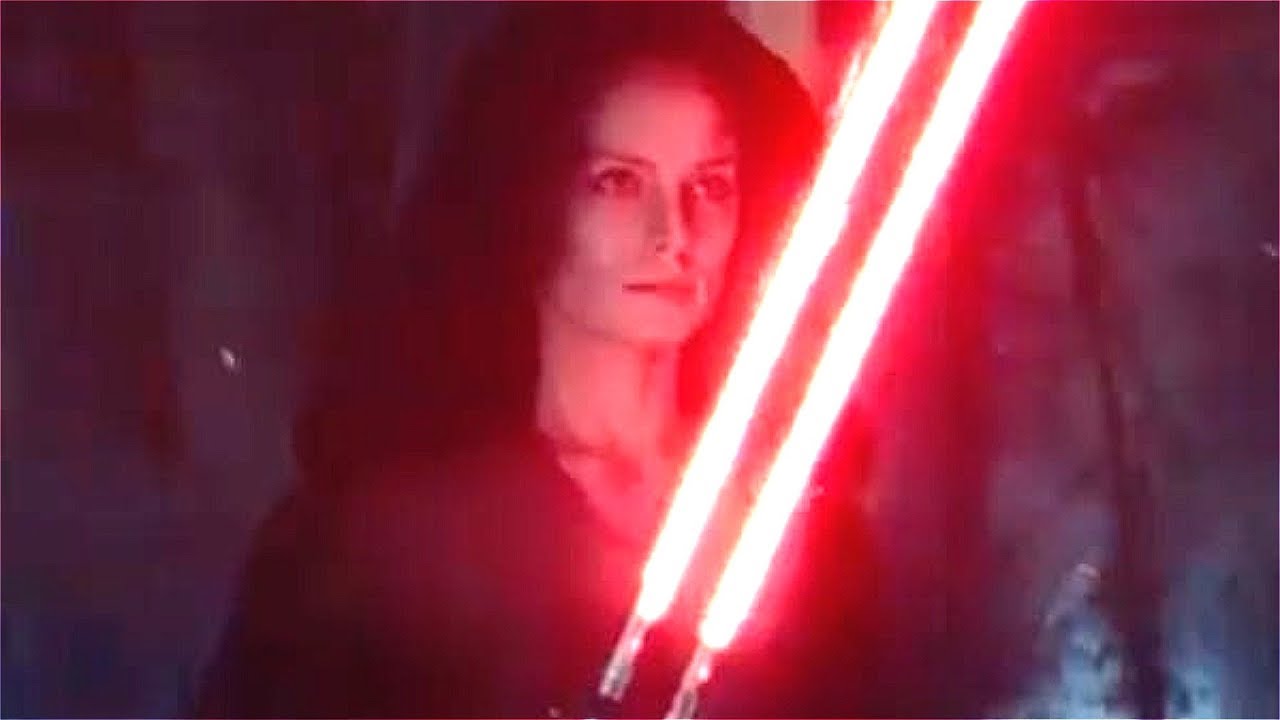
I first started (recently) thinking about this when I saw the fan-rage over the teaser trailer to the latest Star Wars movie, Episode IX, The Rise of Skywalker. There's a moment with a folding lightsaber - yes, that moment, I can see you folks in the back already twitching in your seats - and within hours, never mind days of that trailer going live, the internet was flooded with people screaming and foaming at the mouth over how stupid a gimmick this was and so on. One particular YouTube channel had a 23-minute long video complaining about the lightsaber. Do you know how long it takes to produce a reasonably professional 23-minute long YouTube video? With props and everything? This person likely invested days worth of work to make it, all to complain about something in five seconds of a trailer for a move about laser swords and space magic.

And you know why? Because the video got tens of thousands of monetized views. But that's a whole other article for another day.

People like to get outraged about things. Yes, there are issues worth getting outraged about, but the shape of a science fiction laser sword isn't one of them. This obsessive, fandom-ish need to explain and legitimize and pick apart and deconstruct every single aspect of our entertainment media is not only exhaustive, it's honestly annoying. It becomes this battleground where people spend more time arguing over their entertainment than actually enjoying anything. This is one of the reasons I don't visit Facebook groups around WW2 films or books - everyone in there is a rivet-counting asshole, and if they aren't, they get shouted down by the rivet-counting assholes. Every single movie you bring up in such a group, there's going to be someone who hates it because some aspect of it was displeasing to them.

THE PAINT JOB ARRRRGGGHHH!
I remember someone complaining about the end of Saving Private Ryan because when the Tiger tank is destroyed by the airplane, the plane didn't have empty bomb or rocket racks attached to its lower fuselage. I also remember someone complaining about the movie Fury, and how "laughably stupid" it was that the Tiger in that movie - in real life the only operational Tiger 1 in the entire world, acquired from the Bovington Tank Museum for use in the film - was in its 1943 Tunisian camouflage paint pattern, and not what one would see on a Tiger in mid-1945. Yeah I am sure the staff at Bovington are just going to paint over and then painstakingly strip and re-paint the only operational Tiger tank in the world just for some asshole in a movie theater. I mean, yeah, this is a bit silly.

I guess my overall point here is, be honest about what you want from entertainment, seek that out, and don't complain about what was never intended to be there. Don't watch Wizards in Space for realistic engineering and physics demonstrations. Don't watch war movies if you'll have an aneurysm over the smallest historical inaccuracy. Don't watch horror movies if you're not prepared to see stupid horror movie tropes in action. Don't watch stupid raunchy sex comedies if you're not prepared to see cringe-worthy sex and gender stereotyping. For a large percentage of the population - for good or for ill - humor is about that which causes discomfort. The Office was all about "cringe humor". America's Funniest Home Videos was all about dads getting whacked in the crotch by whiffle bats. There is no getting away from this - it is at the heart of what is entertaining for some people.

Now, to circle back to my opening statement, you can be justified in being upset at something when it tries to do that thing, but actively fails to do so. If your entertainment is about female empowerment, but you fall back on cringy, decades-old stereotypes, or if your message is that female empowerment is in some way bad and you're trying to be edgy by subverting this...than people should call you out for what you are, because you are trying to do that thing and doing it badly. This also doesn't mean you can be left off the hook for obvious racism, sexism, homophobia, and so on just by saying "well this movie was never intended to address that". We live in too-aware a society for that to be a legitimate excuse anymore. I sort of look at it like the old doctor's premise, "First, do no harm". As long as you can avoid being actively racist, sexist, and so forth, I feel you are not required to actively address those and other social issues if that is not the nature and theme of your entertainment.

At the end of the day, as I mentioned in a recent post about modern reading habits and sources of entertainment, we only have so many hours in the day in which to consume entertainment, so why would we purposefully seek out entertainment that doesn't fit with our entertainment comfort zone? Life is too short and blood pressure too high already for us to do that to ourselves.

Monday, September 2, 2019

Media Monday: People Read Less - So What?

Now that we've gotten that no doubt controversial post title out of the way - yes, according to this article on The Passive Voice Blog, a recent study on how Americans use their leisure time showed that in the last fifteen years, the amount of time we spend in leisure reading has dropped about 30 percent.

Now, before you run off and claim this is a sign of the fall of Western civilization, feel free to head over to the Bureau of Labor Statistics and take a look at the Time Use Survey data. Unless there's a more select breakdown of this data, their categories are pretty broad, and if I may say so, kind of antiquated. They refer to "computer use", but don't seem to indicate if that also includes mobile devices like smartphones and tablets. They also list "socializing and communicating", but I'm not sure if that includes communicating digitally via messaging or other social media. Further, they refer to "watching TV", but as there are so many people these days who almost exclusively stream their TV content via a computer, what if I am watching television via my laptop? Or I'm watching YouTube or Twitch, but on my television?

The crux of the worry here, for this blog post at least, is that people are reading less. And I think the above paragraph might shed a little light on why. Although claims have been made that we've been reading less since the 1980s, I would wager the decline has been more rapid in the last 10-15 years, and for obvious reasons. People these days simply have more ways in which to spend their leisure time, and although I don't know if people have more or less leisure time these days, We all have only so many hours in the day, period. Looking back at the 1980s as the starting point for this decline, we have the arrival of cable television and computer video gaming as two major time sinks. Cable is especially important when you look at that time use survey and see that by far, "watching TV" is still considered the largest leisure activity. Once the average person's TV content went from a handful of channels to dozens, including channels that showed theatrical movies, there was a lot more content for the TV viewer to consume. Also consider that this would have been a boom time for cassette tapes, VHS tapes, and then as time went on, CDs and DVDs. "Home entertainment" exploded in the '80s and '90s, even if you set aside home computing and console gaming, which you really can't.

But what about the books? Someone on the Internet told me that Men stopped reading because [insert awkward and sexist bullshit here]. Well, it is true that a lot of "Men's Fiction" dried up during this time period, but I believe it had less to do with the lack of testosterone in the Publishing World, and more to do with a lack of profit, both for the authors and for the publishers. Most of the serial fiction writing was done on a write-for-hire basis, without any royalty structure, which meant you got one paycheck for your novel, regardless of how good or bad it was. This, along with rapid turnaround times for getting books out the door, and the steady merge-merge-merge of smaller houses being bought up by larger ones, and little imprints being abandoned because they weren't profitable enough, caused a lot of venues for "Men's fiction" to simply dry up. Why should a major publishing house pump out skinny little dimestore novels when it could put out a doorstopper hardcover, then sell the same book six months to a year later as a mass market paperback?

This article about veteran novelist David Morrell is pretty telling in this regard. His iconic character, John Rambo, first came to live in a novel where (spoiler alert) he's killed off at the end. But Morrell was lucky enough to sell the rights to the novel as a movie deal, and in that film, FIRST BLOOD, Rambo doesn't die in the end. In fact, he goes on to make multiple blockbuster movies, including one coming out this very month. Even the author himself notices that he has a moment of disconnect when he sees his character in its screen persona, so far removed from that character he penned decades ago. Morrell lived through this transformation in the publishing business, where the question stopped being whether it was a good book that would sell, into just how marketable is the book - how far can you carry it into possible TV or film options. What about streaming venues? Video games? A book is no longer just a good story, it is precious intellectual property that can be branded and milked for every possible drop of profit.

And to circle back to advancements in media for a moment, while traditional publishing houses might have failed not only their authors but their readers, leaving their leisure time to be consumed by TV and video game entertainment, now multimedia entertainment means anyone carrying a smartphone has in their pocket access to whatever form of entertainment they desire - from books, to music, to movies and television, to video games and instructional videos, newspapers, magazine articles, interpersonal and social media communication channels, and much more.

We have access to more information - reference and entertainment - right now in our pockets than anyone before us in the history of the world. It is only natural that we make use of that access, and such use eats into time that, in decades past, was used to read a novel. And you know what? That's okay. I have always been an avid reader, and I would never tell anyone to not read for pleasure, but there are so many other venues for entertainment these days, and there's nothing wrong with partaking in them, because at the end of the day, if you gain enjoyment out of doing it, that's what's most important.

Now, does not reading mean we are negatively impacting our vocabulary, our own literacy, our very imagination? Maybe yes, maybe no. I know a lot of early Gen-Xers and Boomers who bemoan that "kids these days" are illiterate and can't write a proper sentence or spelling...and then you see these people post on Facebook, and in my mind, their arguments become invalid. If someone wants to better their vocabulary or educate themselves, the online and digital resources available to them now make the resources available to me when I was growing up pale in comparison. I regularly turn to YouTube or some other online resource for information on a wide variety of topics, and these digital resources can provide information in a way that no written text ever could.

So at the end of the day, yes, people might be reading less, but does that mean they are learning less? Are they using their imaginations less? Are we simply shifting where we are dedicating our time and changing the way we learn? Is watching a YouTube channel on history worse than reading a history book? Is watching a Netflix series about bank robbers worse than reading a series of novels about bank robbers? Is watching someone stream a video game over Twitch really that different from going to an arcade and watching someone play Pac-Man?

Thursday, February 8, 2018

20 Random Thoughts While Binging TRUE BLOOD

When it first aired, I watched all but the final season of HBO's series TRUE BLOOD, based on the Southern Vampire Mysteries series written by Charlaine Harris. The television series took extensive liberties with the characters and plot of the books, but I'm guessing since Harris is likely sunbathing on a mountain of gold doubloons thanks to all that HBO money, she didn't really mind.

Now, over the last few months, I binge-watched the series in its entirety, because while vampire-related things aren't really my bag, the show did have some hilariously over-the-top moments, and I wanted to finally see the last season and close out the series. Being able to watch it a second time and muse over other aspects of the show, I had many random thoughts while watching. So, in no particular order:

  1. By the end of the series, I felt the same way about Sookie Stackhouse as I did about Jack Bauer - I was so damn tired of people saying her name, that the sound of it made me cringe every time. Especially when Bill said it. "Sookie!" Ugh.
  2. Speaking of Bill, he's just such a dick. Despite being one of the main characters throughout the series, I just hate his guts the entire time.
  3. Eric, on the other hand, is AMAZING. He is everything awesome which Bill is not.
  4. Sam really is that handsome, middle-aged guy who manages to charm the pants off of every single (and not so single) woman in a hundred mile radius. When he gets called "silver fox" by his girlfriend's mom, I just lost it. Howls of laughter.
  5. Werewolves really get the shaft in this series. Clearly, Harris/HBO aren't using World of Darkness rules as reference material.
  6. At some point in this, we definitely needed a werewolf to go full Crinos and tear a truck in half, then beat a couple of vampires to death with the scrap metal.
  7. Why don't these damn vampires use swords? If you move faster than the eye can see, and you're strong as hell, a sword would just be an amazing force-multiplier. Especially since many of these vampires were around before the gunpowder age.
  8. Seriously, how can you have a thousand-year old vampire viking who never uses a sword?
  9. Okay, he takes a couple of wakizashi from some Yakuza guy and double-stabs him, but that doesn't really count.
  10. If I was a vampire, I'd also be rocking some body armor with a ballistic hard plate over my heart front and back. Try getting that broken-off broom handle through a half-inch plate of hardened steel, buddy.
  11. I love how vampires, with their preternatural senses, almost never use guns firing wooden bullets to kill each other (which would be the easiest way to close the age power level gap), but some redneck hillbilly dipshit who has no idea how to shoot a handgun can make an offhand shot at a centuries-old vampire and hit the vampire's fist-sized heart without aiming, killing them.
  12. I'm not sure if vampires turn into a blood ragout in the Harris novels when they die, but it is hilariously disgusting in the TV show. Especially when the death is dramatic and emotional and someone is embracing said vampire. Gross.
  13. The behavior and intelligence of the average Bon Temps resident can be confirmed as realistic by spending five minutes in any political group on Facebook.
  14. I don't care if it has magical healing properties, drinking blood is disgusting.
  15. The single coolest kill in the show is a shifter turning into a fly, then getting swallowed by a vampire, and shifting back to human inside the vampire, causing the vampire to explode like a blood grenade.
  16. Given that vampires aren't really alive, and I'm guessing their hearts don't actually serve a functional purpose, why doesn't someone open up a business implanting vampires with titanium heart-armor inside their body cavities? You could totally make some kind of armored housing that just snaps together around the vampire's heart without severing the arteries.
  17. It's really kind of sad how the Harris novels were meant to use vampires as an analogy towards viewing discrimination and society in the South, but HBO just largely turned it into a show about sex and violence...like they do just about everything else.
  18. Jason Stackhouse is a moronic dipshit, but man, he's pretty much what every guy wants to have as their pickup-driving, beer-drinking, horsing around best friend. Although he really is the personification of that "you versus the guy she tells you not to worry about" meme.
  19. Not killing Lafayette at the end of season 1 was the smartest decision HBO ever made, aside from writing that big goddamn check to George R. R. Martin.
  20. And, finally:

Tuesday, December 4, 2012

Post Modern Pulp Blog Wins Liebster Award

Sean over at the Civil War Horror Blog has been kind enough to nominate PMP for the Liebster Award, a great way to get people to shine a light on some excellent, but less-traveled blogs. Sean's a writer for Osprey books (an invaluable research source for my WW2 writing) and he's also an accomplished travel writer, recently doing a multi-part travel blog about Iraq for Gadling. Even if the Civil War isn't of much interest to you, Sean's blog has something for everyone.

Back to the Liebster Award. Allow me to provide the the rules for accepting the Award:

-----------------------------------------------
Copy and paste the award on your blog linking it to the blogger who has given it to you.

Pass the award to your top 5 favourite blogs with less than 200 followers by leaving a comment on one of their posts to notify them that they have won the award and listing them on your own blog.

Sit back and bask in that warm fuzzy feeling that comes with knowing that you have just made someone's day!
 -----------------------------------------------


As I stated on Sean's blog, I don't know if it's a good thing or a bad thing that five of the most interesting blogs I regularly read have less than 200 followers. But hopefully this will do them all a service and drive traffic their way. Here goes:


Glorious Trash is penned by Joe Kenny, one of the most dedicated readers and reviewers I know. Joe's ability to grind through some of the most awful dreck imaginable and write a lengthy, detailed, informative, and yet highly entertaining review is second to none.  Anyone who enjoys "trash fiction" of any stripe should check out Joe's blog, because while a lot of it falls under the "men's adventure" umbrella, other works are simply exploitative, trashy, decadent, erotic, or just plain pornographic. Fun times.


Atomic Pulp & Other Meltdowns is authored by fellow Mainer, Christopher Mills. Chris is a trained comic book and graphic design artist, and he's also done a fair bit of writing himself. Chris maintains a number of blogs, but I think AP&OM is his best. Chris has a taste for 70's and 80's action movies and television that I can relate to, and while I'm not that interested in comic books, Chris presents a lot of classic comic material in such a way that I can still get a lot out of his posts. If you're interested in sci-fi/pulp/action/kickass media, Check out Chris's blog.


Rough Edges is the blog of veteran author James Reasoner. An author with decades of experience under his belt, RE is not only a great resource for finding new books to read, but James is one of the many traditional authors who is delving into the e-pubbing revolution. He's releasing new titles of varying lengths, from whole novels to short novellas and lots in between, as well as getting his old titles back into circulation again, some of these for the first time in decades. Even if you're not a fan of the Western fiction genre, Rough Edges is worth visiting on a regular basis for new book releases as well as a ton of other great content.


Adventures in Writing is owned by another long-time author, Mel Odom. Like James, Mel has been diving into the world of e-publishing with both feet forward, penning new works, partnering with other authors, and promoting various books written by both new and veteran authors. Mel has a love for many genres, from Western to Sci-Fi, to Urban Fantasy, Military Adventure, and the list goes on and on. I've bought a number of ebooks over the last couple of years on Mel's recommendations, and most of the time, I've found he's been spot on.


Arcadia Prime was originally created by my friend Dan Eldredge as a place to post his battle reports for the Warhammer 40,000 military sci-fi wargame. But over time, Dan has expanded AP to include the occasional book review, studies in creating wargaming terrain, vehicle modeling, and a number of studies in camouflage and camouflage painting techniques. Recently, Dan's become interested in the WW2 wargame Flames of War, and has written about it as well. Furthermore, Dan is not only a longtime friend, but he serves as  one of my most faithful sounding boards for my writing, and last month, he entered into the forlorn ranks of us indie publishers with his new novel, The Pirates of Alnari.

Wednesday, June 27, 2012

Television Series Review: The Sopranos

I feel like a bit of a fool for trying to write a blog post about this series, since I imagine that anything that could be said about The Sopranos, has been said long ago. However, I recently took the time to watch the series online from start to finish over the course of a couple of months.

I've never been a big fan of "mafia movies". I've seen The Godfather once, ages ago, and I've only seen the sequel in pieces. I don't really care for Goodfellas or Casino or many other mafia-related movies either, because I've always felt they glamorize organized crime way too much, even when things go badly for the characters (as they so often do). Because of this, I refused to watch The Sopranos for years, thinking it would be more of the same, even though many of my friends insisted I'd enjoy the series.

When I finally took the plunge and began watching, I understood what all the fuss was about.  The show covers the period of 1999 to 2007, and is a very "post-modern" look at the world of the Mafia. Gone are the days of Vito Corleone holding court in a mansion with guards patrolling the grounds. Tony and his "crew" do business out of the back of a seedy strip club along some boring stretch of road in New Jersey. Tony lives in a completely generic "McMansion", his kids are spoiled brats, his wife hounds him about picking up milk and bread on the way home, and of course, Tony has to see a therapist, like everyone else these days.

Tony's relationship with his shrink is probably the most unique aspect of the series. In many ways, Dr. Melfi is the viewer's surrogate; her questions and reactions to the things Tony says and does are, essentially, our own. As Dr. Melfi's relationship with Tony becomes more complicated, and she becomes more fascinated with the criminal underworld he operates within and the power he wields, we the viewers begin to realize that we hold that same level of fascination.

And yet, at the same time, Melfi's objective detachment also mirrors our own. Tony Soprano and the organization he represents is a long way from the heady days of Prohibition-era organized crime. These are gangsters who've grown up brainwashed by their own Hollywood-conceived mythology. Wiseguys sit around quoting gangster movies and making pop culture references, and Christopher (Tony's nephew/cousin) is obsessed with becoming a writer or movie-maker, constantly scribbling semi-literate attempts at his own Mafia-inspired crime fiction. Christopher's story emphasizes the way in which his generation within the Mafia is but a faint shadow of the organization's glory days.

It isn't necessarily by coincidence that I watched The Sopranos while working on my vigilante revenge thriller, Killer Instincts. The main character's family is killed by a small Boston Mafia crime syndicate, and it is made clear that the family is one of the last gasps of Mafia-based organized crime in the City, the rest having been hunted down by the FBI or shoved aside by other organized criminal elements such as the Russian or Irish mobs.  While we don't really spend any time in the heads of the Mafia characters, it is clear that they are also, in one way or another, deluded by their own mythology.

Having said all that, I almost feel like a hypocrite for enjoying the series so much, but because you end the series almost pitying Tony and his friends, rather than admiring them, I think it is a messily realistic look at these modern-day Mafiosi.

Wednesday, June 6, 2012

D-Day Tribute: HBO's Band of Brothers "Day of Days"

I won't review the whole miniseries here, since that's several posts all by themselves, but if you're a fan of World War Two history, you really need to see Band of Brothers. All round excellent production values, great storytelling, superb casting, and some incredible combat sequences to boot.

In celebration of D-Day, I thought I'd post the opening few minutes from Episode 2, "Day of Days".  If you've never seen Band of Brothers, you can dig around on YouTube and find a bunch of clips from various episodes.


I'll say that the same praise I give BoB, goes for HBO's other WW2 series, The Pacific. Another incredible miniseries, and if you get the chance to see it, I highly recommend it.

Tuesday, April 17, 2012

Television Series Review: Justified

Since it's been on TV for three seasons (just wrapping up its 3rd season last week), I feel a little silly recommending this amazing series simply because, if you haven't watched it yet, you probably aren't going to do so any time soon.

However, my love for this series compels me to get on a soapbox and state that I think it's one of the best crime dramas I've seen in a long, long time.  This past week, I sat down and watched the first two seasons on DVD, mostly as a refresher to events leading up to the third season. For anyone completely unfamiliar with the series, Justified follows the adventures of Deputy U.S. Marshall Raylan Givens as he hunts down criminals and battles his own personal demons deep in the heart of Kentucky coal country, Harlan County. If that place-name rings a bell, that's probably because you've heard of Harlan Country, USA, an award-winning documentary about coal mining and battles (literally) between the miners and the mining company. I've seen the documentary and it is a powerful, sometimes shockingly brutal story of small town feuds, politics, and the struggles between small towns and big businesses.

However, back to Justified. After a very public and controversial shooting in Miami, Raylan Givens is transferred to the Lexington, Kentucky office of the Marshall's service. Born and bred in Kentucky, Raylan is horrified to be transferred there; he "escaped" the state at 19 and had no intention of ever going back home, but the Marshall's service thinks otherwise. Raylan is put under the supervision of Art Mullen, an old friend and former shooting co-instructor when Raylan taught at Glynco, where the Marshall's service training facilities are located. Between this piece of information and the shooting in the opening moments of the pilot, we're given some indication that Raylan Givens is not a man you want to draw down on, and believe me, that is a notion reinforced over the course of the series.

Back home in Kentucky, Raylan finds himself returning time and time again to Harlan country, where he grew up and now must perform his duties, hunting fugitives who used to be old high school classmates and hell-raising buddies.  This is one of the strongest points in the series; the interactions between Raylan and so many people from his past, most of whom have decided to pursue interests and a way of life that is fundamentally at odds with Raylan's career as "a federal". That he is now lumped in with the "revenuers" and other "big city lawmen" who are universally despised by his old acquaintances is a constant point of conflict, and one that is handled admirably, both by the writers and directors as well as the cast.

As has been done by many reviewers, Graham Yost (the man who developed the series) refers to Justified in one of the commentaries as a "post-modern western". This comment perked my ears up for obvious reasons, and I think the label fits. Raylan Givens is every inch the Western lawman, from his quick-draw skills to his cowboy boots to his hat and his intense, deadly stare. Timothy Olyphant is the perfect actor to portray a western lawman, a fact validated by his great performance as one in the HBO series Deadwood, where he played another Marshall, Seth Bullock. However, Olyphant's great performance on that series is, in my mind, completely overshadowed by his role as Raylan Givens, who's wife describes him as "...the angriest man I have ever known". This is one of the lines that sold the role to Olyphant, because it cuts to the heart of his character; for all his modern civility and smooth talking when the situation calls for it, there resides in the heart of Raylan Givens a smouldering ember of righteous fury and explosive violence. When he is confronted over his recent series of shootings, his boss Art says something to the effect of "...if you were in grade school and bit a kid every week, pretty soon you'd get the reputation as a 'biter'". Well, Raylan has the reputation as a "shooter", and over the course of three seasons, that is a reputation he earns in spades. Justifed has a number of shootouts, and while they are all to a greater or lesser degree "justified", it is clear that Raylan has a tendency - conscious or not - to place himself in situations where gunplay is the only solution to the problem. Raylan is a hammer, no doubt about it, and many people throughout the series feel that he looks at every criminal as if they have a nice, flat surface at the top of their heads.

However, the fault doesn't lay entirely in Raylan's lap. The criminal element in Justified is rife with violence and murder, where poverty and desperation drive many to commit heinous crimes, and where generations of feuding and clandestine criminal activity in the backwoods of the "hollers" can only be mitigated by law enforcement, never eradicated. Every character has access to a firearm, be it a double-barreled "scattergun", a hunting rifle, a revolver in a drawer somewhere, a more modern semi-automatic pistol or assault rifle. Having grown up in a rural area myself, I know that guns are more common than pickup trucks, and there's a whole lot of pickup trucks. This doesn't necessarily make every character a criminal, but it does give everyone a lethal means of resolving conflicts if pushed into a desperate corner.

All this mixes into a heady brew of American tropes that form the heart and soul of the series. Classic Western stories most often revolve around the individual coming into conflict with an entity larger than themselves - a feuding family, a coal mining company, a law enforcement agency, or a marauding band of violent gun thugs. The individual taking the law into their own hands - justified or maybe not so much - forms the crux of the conflict in these stories. In this series, Raylan's struggles to remain on the right side of the law in a lawless land form the show's over-arching conflict, as he is dragged time and time again into personal feuds and vendettas with old acquaintances and new enemies.

But what makes this show a "post-modern western"? Well for the easy money, you could certainly pick the show up, dust off all the modern trappings, and drop it back into Harlan country a hundred years ago, and the series would still pack a lot of punch. But it is the generations-old mentality of the locals coming into conflict with the modern world of business, criminal enterprise, and 21st century law enforcement that gives the show its unique flavor. Hillbilly moonshiners using cell phones and M-4 carbines, drug dealers selling "hillbilly heroin" (Oxycontin), meth cookers making deals with Cartel kingpins on Florida golf courses...despite the mixing of such disparate worlds, it is a mixture that works, and works very well.

Although the third season has just ended, you can get the first two seasons for a song via Amazon. I picked up the first season on DVD for $15, and I think that's not too much to ask for 13 episodes of top-notch television drama. Fire up the television, pour yourself a bourbon, tip back your hat, and dive into the world of Harlan country, Kentucky.

Wednesday, February 22, 2012

Hatchet Force Journal Issue #2 - Now Taking Submissions

The people have spoken, and the people want another issue of Hatchet Force Journal.

I received a lot of great feedback about the first issue, and I'm hoping to incorporate much of it into the release of issue #2.  I don't think I'll be able to accommodate everyone's wishes, but I'll do my best to make #2 a lot better than the first issue, which even I'll admit was a bit of a hot mess (although hey, people are still buying and borrowing it).

First off, submission guidelines!
  • Length: Between 1,000 and 1,500 words.  If you color outside the lines a little bit that's fine, but I'm trying to cut down on the size of the articles - that was one of the main complaints I received about the first issue.
  • Topic: Issue #2 has a theme! "21st Century Combat".  This can be combat operations, counter-terror, law enforcement, mercenaries, what have you.  But we're focusing on the 21st century, post 9/11 world view.
  • Keep it Politically Neutral.  If you want to talk about private security company operations in Iraq that's fine, but if you want to turn it into an article about the privatization of the American military, I won't accept it.
  • Pictures encouraged.  Since it'll be released on the Kindle, pick something that'll look half-decent in black and white.  I may have to play around with it in Photoshop to make it pop a little, but otherwise I won't alter anything other than file size etc.
  • Fiction and Non-Fiction Reviews/Articles Welcome.  HFJ is about action and adventure stories in all forms; television, film, books, video games, real-world reference articles, excerpts - all is fair game as long as it's on-topic.
I'm looking for ~12 submissions, and I'm hoping to get them all in by March 9th.  I'm aiming for a release date in the beginning of April.  If anyone is interested in submitting an article, feel free to e-mail me (j dot e dot badelaire at gmail dot com).

Friday, February 3, 2012

Book Review: McGrave by Lee Goldberg

When Lee Goldberg sent this out, I stopped reading the novel currently sitting at the forefront of my kindle, transferred the file over, and dived right in.  Goldberg wants McGrave to be the sort of fast-paced, delicious junk food action story that guys like me read on our lunch breaks or while we're sitting glumly at 8 AM on the subway or commuter rail.

I started reading this zany cop action smorgasbord over lunch, with a big greasy burrito and a bottle of cheap beer, and found myself a good fifteen minutes late back to work because I couldn't put them damn thing down.  McGrave is that perfect blend of action, humor, gratuitous violence and ludicrous hyperbole that fueled so much of my adolescent reading materi...oh, who am I kidding?  It's still the bread and butter of the printed pages I read.

Goldberg mentions at the end of the book that McGrave was originally a script for a television pilot, and you can absolutely see that.  It is intentionally written in a "televised" style, focusing almost exclusively on what the mind's eye sees and hears as you read through the story.  No deep introspection, no long discussion of the finer points of human nature.  This book is the literary equivalent of buffalo wings and boilermakers. 

So, if you like cop action thrillers where the good guys punch first and ask questions later, where every time the good guy walks back into the police station the Captain's blood pressure shoots through the roof, and every time he walks back out the city's civic repairs budget takes another big hit, McGrave is your new favorite ebook.

Friday, March 25, 2011

What The Libyan Rebels Need is Airwolf

I didn't realize it, but I am apparently some kind of psychic foreign policy rainmaker. Just a couple of weeks ago I decided to start watching Airwolf on Netflix, and of course, the first two episodes, Shadow of the Hawk Parts One and Two, deal with Airwolf's evil genius creator taking the super-copter to Libya so he can use it as a bargaining chip to do all sorts of sadistic things to women. Hey, I guess even aeronautical engineering madmen need love too - it just involves dead hookers.

C'mon, do you want to try and pick up chicks in a back-talking blabbermouth sports car,
or a silent, bulletproof, supersonic assault helicopter that resides in a secret desert lair?

When I was a kid, I loved Airwolf. Of course, I also loved The A-Team, and Magnum P.I., and Knight Rider, and MacGyver, and pretty much any other 80's television series that involved kicking ass and taking names. This was the era in which America's post-Vietnam angst provided television with a smorgasbord of ideas; television shows about Vietnam veterans, or episode plots that revolved around vets, or simply grooved off of the post-modern pulp fiction era's themes of harsh vigilante justice, taking the fight to the enemy and "winning the unwinnable war", and many others.

Airwolf was, in many ways, a top contender for the king of the post-modern pulp television series. Although A-Team might beat it out in some regards, Airwolf had the secret government agency, the Vietnam angle, the high-tech gizmos, the Cold War adventures, and most telling, it had a body count. I understand the plot reasoning as to why the A-Team didn't kill people, but just as I got tired of Xena: Warrior Princess punching bad guys with her fist instead of stabbing them through the head with her sword, I got a little tired of the A-Team not lighting up the scumbags they always dealt with.
Okay K.I.T.T., let's see you do THAT. Oh wait...you can't. Because you're unarmed. Like a little bitch.

Airwolf, on the other hand, kicked ass for reals, yo. Rocket launchers, cannons, machine guns; Airwolf had it all. Stringfellow also packed a .45 and knew how to use it. But most of all, what two key aces did Airwolf have up its supersonic sleeves?

An Agency honcho with one eye and a spotless white suit, and Ernest Borgnine wearing a bad tie.

If you haven't had a chance to see this show in a while (like...20 years or so...), give it a shot. It's the 80's, the plots are about as tightly woven as a fishing net, but it's still a lot of fun.