I went to see this movie with six other people, ranging from die-hard Tolkien fans to those who were tagging along mostly just to see a movie with their friends. At the end of this three-hour adventure, the impressions were unanimously positive, and I can't help but agree.
This movie is very clearly - far more clearly than the book, if you ask me - a prequel to the Lord of the Rings films. A lot of the added material, much of it events that are implied or could have easily happened off-stage in the original story, sets up the relationships between such powerful players as Saruman, Gandalf, Elrond, Galadriel, and even the goofy but nevertheless very wise Radagast. This is the prelude to war, even though the war doesn't come about for another sixty years, and you can see the cunning of Gandalf as he moves his chess pieces onto the board and begins to carefully position them for the battle to come.
I had been wondering before seeing the film how they were going to take a book that was shorter than any of the three LotR novels, and expand it out into three whole movies. I think ultimately they did a serviceable job, although it is clear in some areas that things were done for the sake of making a good show of the story, rather than sticking to the narrative. One good example of this is the battle between the storm giants. I think this was an okay sequence, but at the same time, it could have been skipped or just reduced to "this storm is too much for us, we need to find shelter!". The storm giants are mentioned in passing in the book, but that's it. For the most part, I think that's going to be what we see in the next two films - things mentioned in passing or just touched upon in the book are going to be expanded into their own complete scenes, and we'll have to judge for ourselves whether this is just Peter Jackson playing around in Middle-Earth, or if it ultimately adds to the story in a meaningful way.
One aspect of the film that did actually bother me was the reliance on CG for the orcs and goblins. In the first three films, while there was some CG enhancement and sequences (the huge fights, the Moria goblins spider-climbing along the caverns, etc.), When seen up close and personal it was clear they were extras in costume. In this film, there might have been a bare handful of costumed and made-up extras, but the vast majority of bad guys are either wholly digital, or motion-captured like Gollum. I think it took a little something away from the spirit of the film, but such is the reality of making movies in the 21st century.
Regardless of a few quibbles I have about such things, I think this was an impressive movie, and if the next two films can maintain the standard set by An Unexpected Journey, I think this trilogy will stand tall next to their older siblings.
Monday, December 17, 2012
Wednesday, December 12, 2012
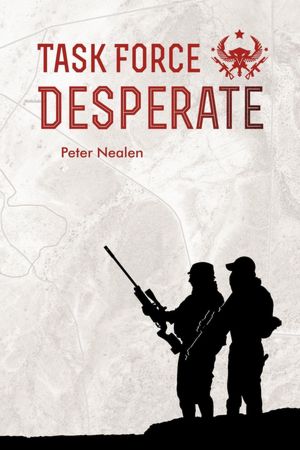
Book Review: Task Force Desperate by Peter Nealen
Former Recon Marine Peter Nealen has written an excellent debut novel,
another in a great new class of 21st century paramilitary men's
adventure novels that we've begun to see over the last few years. With
over a decade since the Global War on Terror started, there is now a
whole new class of veteran/author emerging at a time when the ebook and
indie book publishing world is making it easy for someone with a deft
pen and some great creative talent to make a name for themselves in the
world of action-adventure fiction.
Task Force Desperate focuses on a small, hearty band of mercenaries called in to perform a reconnaissance after a US base in Africa is overrun, with two hundred hostages taken. Probably the most interesting aspect of the novel is the dystopian, near-future world Nealen has created. Although no exact year is given, the reader is given the impression it is only a handful of years into the future, but the world has taken a nasty turn for the worse. The US economy has collapsed, and with it a lot of the global economy, coupled with uprisings and destabilization all around the world. This subtle shift in timeline, coupled with the encyclopedia of African and Middle Eastern factions that are mentioned or make an appearance in the book, means that if you're not on top of your global current events and poli-sci, your eyes might glaze over a little bit in certain parts of the book. I don't ding Nealen any points because of this - it means the reader simply needs to pay attention. The book is written to a certain audience, particularly those people who pay attention to world events, military technology and tactics, and enjoy reading about a crew of crack operators kicking down doors and double-tapping bad guys in the X-ring.
Thankfully for Nealen, this sort of fiction has a pre-fabricated audience: former runners and gunners like himself, guys who've played in the sandbox, know the dope, and are also smart, savvy, articulate professionals who'll talk geopolitical trends one minute, the advantages of the .338 Lapua Mag the next, and maybe even settle in for a few beers and some Call of Duty on a lazy Saturday afternoon. These guys might like to call themselves "knuckle-draggers", but to be fair, many of them are or will become college-educated, and possess a lot of skill in assimilating data, dynamic problem-solving, and other cognitive skills. In short, they're smart people, and they can appreciate a smart, complex story like Desperate.
I should perform my due diligence and point out that the action sequences are top notch, flow quickly, and really keep you flipping pages. Nealen isn't above killing characters off, and things get pretty messy before they...well let's face it - there's a reason the book's titled "Task Force Desperate"...
If you like sophisticated, well-written action, give this a read - you won't be disappointed.
Task Force Desperate focuses on a small, hearty band of mercenaries called in to perform a reconnaissance after a US base in Africa is overrun, with two hundred hostages taken. Probably the most interesting aspect of the novel is the dystopian, near-future world Nealen has created. Although no exact year is given, the reader is given the impression it is only a handful of years into the future, but the world has taken a nasty turn for the worse. The US economy has collapsed, and with it a lot of the global economy, coupled with uprisings and destabilization all around the world. This subtle shift in timeline, coupled with the encyclopedia of African and Middle Eastern factions that are mentioned or make an appearance in the book, means that if you're not on top of your global current events and poli-sci, your eyes might glaze over a little bit in certain parts of the book. I don't ding Nealen any points because of this - it means the reader simply needs to pay attention. The book is written to a certain audience, particularly those people who pay attention to world events, military technology and tactics, and enjoy reading about a crew of crack operators kicking down doors and double-tapping bad guys in the X-ring.
Thankfully for Nealen, this sort of fiction has a pre-fabricated audience: former runners and gunners like himself, guys who've played in the sandbox, know the dope, and are also smart, savvy, articulate professionals who'll talk geopolitical trends one minute, the advantages of the .338 Lapua Mag the next, and maybe even settle in for a few beers and some Call of Duty on a lazy Saturday afternoon. These guys might like to call themselves "knuckle-draggers", but to be fair, many of them are or will become college-educated, and possess a lot of skill in assimilating data, dynamic problem-solving, and other cognitive skills. In short, they're smart people, and they can appreciate a smart, complex story like Desperate.
I should perform my due diligence and point out that the action sequences are top notch, flow quickly, and really keep you flipping pages. Nealen isn't above killing characters off, and things get pretty messy before they...well let's face it - there's a reason the book's titled "Task Force Desperate"...
If you like sophisticated, well-written action, give this a read - you won't be disappointed.
Tuesday, December 11, 2012
Operation Arrowhead Gets A New Cover!
![]() |
| Click the Cover to Visit the Book on Amazon |
Ander has created for me this cover for C: OA and he's in the process of making a cover for Operation Bedlam, the second book in the series. He's also provided to me individual pieces for each of the four characters featured on this cover.
While I thought my old cover was...functional...I think the new cover is not only a lot more professional-looking, but serves to portray the feeling of the book a lot more accurately. Several people have compared the novel to the old British Commando Comics, and so I think an illustrated cover fits the bill nicely.
To go along with the new cover, I've revised the novel, and in addition I have included the short story, "The Train to Calais". I did this mostly for those who buy the paperback version of the book, as the short doesn't have a print version. However, to keep the print and Kindle versions the same, I included the short in the ebook version as well.
Anyhow, thank you all for your continued support, and I hope you enjoy the new cover!
Tuesday, December 4, 2012
Post Modern Pulp Blog Wins Liebster Award
Sean over at the Civil War Horror Blog has been kind enough to nominate PMP for the Liebster Award, a great way to get people to shine a light on some excellent, but less-traveled blogs. Sean's a writer for Osprey books (an invaluable research source for my WW2 writing) and he's also an accomplished travel writer, recently doing a multi-part travel blog about Iraq for Gadling. Even if the Civil War isn't of much interest to you, Sean's blog has something for everyone.
Back to the Liebster Award. Allow me to provide the the rules for accepting the Award:
-----------------------------------------------
Copy and paste the award on your blog linking it to the blogger who has given it to you.
Pass the award to your top 5 favourite blogs with less than 200 followers by leaving a comment on one of their posts to notify them that they have won the award and listing them on your own blog.
Sit back and bask in that warm fuzzy feeling that comes with knowing that you have just made someone's day!
-----------------------------------------------
As I stated on Sean's blog, I don't know if it's a good thing or a bad thing that five of the most interesting blogs I regularly read have less than 200 followers. But hopefully this will do them all a service and drive traffic their way. Here goes:
Glorious Trash is penned by Joe Kenny, one of the most dedicated readers and reviewers I know. Joe's ability to grind through some of the most awful dreck imaginable and write a lengthy, detailed, informative, and yet highly entertaining review is second to none. Anyone who enjoys "trash fiction" of any stripe should check out Joe's blog, because while a lot of it falls under the "men's adventure" umbrella, other works are simply exploitative, trashy, decadent, erotic, or just plain pornographic. Fun times.
Atomic Pulp & Other Meltdowns is authored by fellow Mainer, Christopher Mills. Chris is a trained comic book and graphic design artist, and he's also done a fair bit of writing himself. Chris maintains a number of blogs, but I think AP&OM is his best. Chris has a taste for 70's and 80's action movies and television that I can relate to, and while I'm not that interested in comic books, Chris presents a lot of classic comic material in such a way that I can still get a lot out of his posts. If you're interested in sci-fi/pulp/action/kickass media, Check out Chris's blog.
Rough Edges is the blog of veteran author James Reasoner. An author with decades of experience under his belt, RE is not only a great resource for finding new books to read, but James is one of the many traditional authors who is delving into the e-pubbing revolution. He's releasing new titles of varying lengths, from whole novels to short novellas and lots in between, as well as getting his old titles back into circulation again, some of these for the first time in decades. Even if you're not a fan of the Western fiction genre, Rough Edges is worth visiting on a regular basis for new book releases as well as a ton of other great content.
Adventures in Writing is owned by another long-time author, Mel Odom. Like James, Mel has been diving into the world of e-publishing with both feet forward, penning new works, partnering with other authors, and promoting various books written by both new and veteran authors. Mel has a love for many genres, from Western to Sci-Fi, to Urban Fantasy, Military Adventure, and the list goes on and on. I've bought a number of ebooks over the last couple of years on Mel's recommendations, and most of the time, I've found he's been spot on.
Arcadia Prime was originally created by my friend Dan Eldredge as a place to post his battle reports for the Warhammer 40,000 military sci-fi wargame. But over time, Dan has expanded AP to include the occasional book review, studies in creating wargaming terrain, vehicle modeling, and a number of studies in camouflage and camouflage painting techniques. Recently, Dan's become interested in the WW2 wargame Flames of War, and has written about it as well. Furthermore, Dan is not only a longtime friend, but he serves as one of my most faithful sounding boards for my writing, and last month, he entered into the forlorn ranks of us indie publishers with his new novel, The Pirates of Alnari.
Back to the Liebster Award. Allow me to provide the the rules for accepting the Award:
-----------------------------------------------
Copy and paste the award on your blog linking it to the blogger who has given it to you.
Pass the award to your top 5 favourite blogs with less than 200 followers by leaving a comment on one of their posts to notify them that they have won the award and listing them on your own blog.
Sit back and bask in that warm fuzzy feeling that comes with knowing that you have just made someone's day!
-----------------------------------------------
As I stated on Sean's blog, I don't know if it's a good thing or a bad thing that five of the most interesting blogs I regularly read have less than 200 followers. But hopefully this will do them all a service and drive traffic their way. Here goes:
Glorious Trash is penned by Joe Kenny, one of the most dedicated readers and reviewers I know. Joe's ability to grind through some of the most awful dreck imaginable and write a lengthy, detailed, informative, and yet highly entertaining review is second to none. Anyone who enjoys "trash fiction" of any stripe should check out Joe's blog, because while a lot of it falls under the "men's adventure" umbrella, other works are simply exploitative, trashy, decadent, erotic, or just plain pornographic. Fun times.
Atomic Pulp & Other Meltdowns is authored by fellow Mainer, Christopher Mills. Chris is a trained comic book and graphic design artist, and he's also done a fair bit of writing himself. Chris maintains a number of blogs, but I think AP&OM is his best. Chris has a taste for 70's and 80's action movies and television that I can relate to, and while I'm not that interested in comic books, Chris presents a lot of classic comic material in such a way that I can still get a lot out of his posts. If you're interested in sci-fi/pulp/action/kickass media, Check out Chris's blog.
Rough Edges is the blog of veteran author James Reasoner. An author with decades of experience under his belt, RE is not only a great resource for finding new books to read, but James is one of the many traditional authors who is delving into the e-pubbing revolution. He's releasing new titles of varying lengths, from whole novels to short novellas and lots in between, as well as getting his old titles back into circulation again, some of these for the first time in decades. Even if you're not a fan of the Western fiction genre, Rough Edges is worth visiting on a regular basis for new book releases as well as a ton of other great content.
Adventures in Writing is owned by another long-time author, Mel Odom. Like James, Mel has been diving into the world of e-publishing with both feet forward, penning new works, partnering with other authors, and promoting various books written by both new and veteran authors. Mel has a love for many genres, from Western to Sci-Fi, to Urban Fantasy, Military Adventure, and the list goes on and on. I've bought a number of ebooks over the last couple of years on Mel's recommendations, and most of the time, I've found he's been spot on.
Arcadia Prime was originally created by my friend Dan Eldredge as a place to post his battle reports for the Warhammer 40,000 military sci-fi wargame. But over time, Dan has expanded AP to include the occasional book review, studies in creating wargaming terrain, vehicle modeling, and a number of studies in camouflage and camouflage painting techniques. Recently, Dan's become interested in the WW2 wargame Flames of War, and has written about it as well. Furthermore, Dan is not only a longtime friend, but he serves as one of my most faithful sounding boards for my writing, and last month, he entered into the forlorn ranks of us indie publishers with his new novel, The Pirates of Alnari.
Monday, November 26, 2012
Book Review: The Pirates of Alnari, by Dan Eldredge
![]() |
| Click Above to Visit the Book's Amazon Page |
The indie publishing explosion over the last few years has given a lot of people the opportunity to dust off their "desk drawer novels". You know, that book you wrote back when you were in grad school, typed on your girlfriends Mac in the wee hours of the morning? As soon as you got a real job, you left your dreams of becoming a writer behind, figuring there's no way you had the time or connections to break into the world of big time publishing. But it's still there, a printout sitting in your desk drawer, a little battered and faded, but every so often, you take it out, thumb through it, and wonder about what it might have been like to be a "Novelist".
Well, thanks to new technologies such as tablets, ebook readers, print-on-demand services, and so forth, becoming a published author is well within the reach of anyone who has the time and energy to tackle the process. Of course "The Process" is a 600-pound Sumo wrestler, and he's pretty unforgiving. Those folks who just re-type that desk drawer novel and throw it up on Amazon expecting to reap the royalties from thousands of ebook sales are in for a rude awakening. Even the people who follow all the advice and recommendations they see online given by dozens of successful indie authors may well find themselves staring at the "brown bar of shame" - the colored indicator in Amazon's Kindle Direct Publishing report page that shows no sales for the month.
Years ago, a college friend of mine mentioned to me that he'd written a few fantasy novels, and asked if I'd wanted to read them. at the time (probably back in the early 90's) he'd farmed the manuscripts out to the usual Sci-Fi / Fantasy houses, and hadn't had any luck. I gave them a read, and although they were the works of an amateur author, I still found them fun and enjoyable stories. But as time went on and we both grew older, not only did I give up my own notions of becoming an author, but so did my friend. These became his "desk drawer novels".
Flash forward more than a decade. After helping me as a beta reader, editor, and endless source of support and counsel regarding my own books, my friend Dan decided to take the best of his old novels, strip it down to its barest elements, and re-write the entire book from soup to nuts. This process took more than a year, and after the draft was written there was the editing, beta reading, discussions of plot and character, so on and so forth. "The Process" is a real bear under the best of circumstances, but Dan's a busy guy, with a full time job and two young kids who keep him on his toes 24/7, so taking the journey from desk drawer novel to a completely rewritten manuscript ready for publishing was especially daunting.
At the end of it all, however, the result is a damn fine book.
The Pirates of Alnari is a "hard fantasy" novel, meaning it is set in a different world, but there is no magic, no elves, no demons or wizards, dungeons or dragons. You could consider it an alternate reality or an Earth that never was. The setting is roughly analogous to 15th-16th century Europe, although there are elements that feel more 18th or early 19th century. Regardless, the level of detail and realism is such that you are quickly pulled into the setting, and any notion that this is a "fantasy" world falls by the wayside.
The story revolves around two young noblemen, Martyn and Arycke. The book begins with them having just participated in something horrible and violent, but the details are left hidden to the reader - this is important, because the mystery of what happened will be slowly revealed throughout the book. Needless to say, there is more than one side to the story. The two young men feel that they need to flee the country, and so travel to the nearest port city and book passage on the first ship that'll get them away. Their ship is the Selene, an Isalian navy frigate willing to take on a few passengers during her voyage. Martyn and Arycke have never taken a sea voyage before, and the experience is new and exciting - even more so, when a beautiful young woman is brought on board as another passenger, along with her ever-watchful grandfather. Arycke, who has an ever-roving eye, immediately begins pursuing the young woman, much to Martyn's annoyance.
The sea voyage quickly turns deadly serious, however, when the ship encounters a pirate vessel. Being a Navy frigate, it is the Selene's duty to deal with pirates wherever they are found. But the battle against the pirates turns into a much more brutal affair than first expected, and the Selene is badly damaged. The ship is eventually lost on a reef during a storm, and the survivors - about a hundred of the ship's crew and the passengers - are stranded along a foreign coast.
Unfortunately for the survivors, the coast they're now inhabiting is claimed by pirates. A whole city of pirates.
I don't want to give away any more of the plot. However, what progresses from this point on is a whirlwind of battles and intrigue, murder and revenge, plot and counter-plot. Characters have multiple agendas and not everyone is as they seem. The survivors of the shipwreck must struggle to avoid capture or death at the hands of different pirate factions, as well as the threat of mutiny among their own number. The pirates constantly maneuver against each other for dominance over Alnari, using any means - violence, sex, money, political influence - at their disposal.
The author holds the works of George R. R. Martin, especially his Song of Ice and Fire series, in high regard, and its influence on the book is evident by both the complex relationships among the characters, and the stark brutality of the combat sequences. The author is well-versed in swordsmanship and medieval combat, and this comes through in the many swordfights throughout the book. Limbs are sheared away, heads roll, guts spill, and blood is drawn by the bucketful. Not only are the battles violent and well-scripted, but it is clear from early on that no character is safe from the author's killing stroke.
Also evident is the author's knowledge of the Age of Sail. There are many details regarding ship navigation and operation, as well as the day to day lives of those aboard ships, and the organization of sailing navies and their military exploits. Although the setting is analogous to the 1400s and early 1500s, the maritime aspects of the book seem to carry the influence of master maritime novelist Patrick O'Brian, whose Napoleonic naval adventures are second to none. Fans of O'Brian's Aubrey and Maturin novels will feel right at home in this book, despite the otherworldly setting.
Overall, The Pirates of Alnari is a strong, exciting adventure and displays the author's skill as a storyteller. While this is Dan Eldredge's first published novel, I know we'll see more works from him in the years to come, and I look forward to reading them.
Currently The Pirates of Alnari is only available on Amazon as an ebook, but the paperback should be available in early 2013.
Thursday, November 15, 2012
The New Breed of British WW2 Fiction
As I begin work on the second novel in the COMMANDO series, I want to share with readers all the great World War Two fiction that's being written these days. People have been writing fiction set around the war since, well, since the war itself. But in the last few years, it seems like there's been a resurgence in WW2 fiction being written in the UK. I hope to touch on these books in more detail in subsequent posts, but here's a quick roundup...
James Holland
James is, like several of the authors in this post, a historian with a number of non-fiction titles under his belt. Starting with his Jack Tanner series, he branched out into fiction, starting with The Odin Mission, which deals with the British taking on the Germans in Norway. There are two other books in this series, but unfortunately none of them are available in the States as Kindle books. I bought my copy of Odin on Amazon as a used book - oddly enough, a large print hardcover for just a couple of bucks. James has a second series, Duty Calls, which is published through Puffin and is intended to be a "Young Adult" series. I've read the first title, Dunkirk, and I'm a quarter of the way through book 2, Battle of Britain. Although marketed as YA, these two books are certainly not "children's books" and perfectly enjoyable and entertaining to older readers. There's plenty of action, some of it pretty intense, and the books move along at a nice, fast clip. Both of these titles are available as ebooks in the US.
Max Adams
Max appears to be a newcomer to the field of WW2 fiction. He is an ex-Naval officer with a background in special operations. His two novels so far deal with a British soldier who used to be civil engineer, which means - for the purposes of the novels - he has some understanding of how to blow things up, and an above-average education. Eddie Dawson, the character the series is named after, is something of a British MacGuyver, able to build or tweak things, or find an unorthodox use for them (in To Do or Die, the first book, he uses German land mines as improvised grenades). I've read the first book in the series, but I'm wavering on the second; the one review the book has on Amazon says that Adams essentially reuses the plot of the first book in a different set of circumstances. I may get around to it, but I'm going to work on some of these other books first.
Iain Gale
Iain is another historian-turned-novelist. He has a British early 18th century war series, and he's now two books into his WW2 series, following a Territorial unit known as the North Kents, nicknamed "the Black Jackals". I've noticed a common theme in many of these books is the BEF's defeat and the retreat to Dunkirk, and his first book, The Black Jackals is no exception. Lieutenant Peter Lamb must lead the remnants of his platoon from the front lines back through France, getting into all sorts of misadventures along the way. The story is very Odyssey-like in that Lamb and his men keep getting side-tracked into battles or other assignments by whatever superior officer they run into, which I found could be a little wearisome at times. Still, I'm looking forward to reading his second book, Jackal's Revenge, as it takes place in Greece and deals with partisan warfare.
Michael Asher
Michael is a travel writer with extensive experience in the desert. He's also a former British paratrooper and served with the SAS. He has several other non-fiction books out, but has become a novelist with his Death or Glory series. The first book, The Last Commando takes place in North Africa, and has some decent reviews. Interestingly, several of the reviewers liken this book, and especially the cover, to the Commando Comics that were published for ages in the UK (a post for another day). Like a number of these British authors, their works aren't available in Kindle form in the States yet, so Michael will have to sit on the back burner for a little while until I get around to buying in paperback or the Kindle version is available in the states.
Well, that's it for now. There are many more books I could include here, and I'll have to do a Part 2 to this roundup soon.
James Holland
James is, like several of the authors in this post, a historian with a number of non-fiction titles under his belt. Starting with his Jack Tanner series, he branched out into fiction, starting with The Odin Mission, which deals with the British taking on the Germans in Norway. There are two other books in this series, but unfortunately none of them are available in the States as Kindle books. I bought my copy of Odin on Amazon as a used book - oddly enough, a large print hardcover for just a couple of bucks. James has a second series, Duty Calls, which is published through Puffin and is intended to be a "Young Adult" series. I've read the first title, Dunkirk, and I'm a quarter of the way through book 2, Battle of Britain. Although marketed as YA, these two books are certainly not "children's books" and perfectly enjoyable and entertaining to older readers. There's plenty of action, some of it pretty intense, and the books move along at a nice, fast clip. Both of these titles are available as ebooks in the US.
Max Adams
Max appears to be a newcomer to the field of WW2 fiction. He is an ex-Naval officer with a background in special operations. His two novels so far deal with a British soldier who used to be civil engineer, which means - for the purposes of the novels - he has some understanding of how to blow things up, and an above-average education. Eddie Dawson, the character the series is named after, is something of a British MacGuyver, able to build or tweak things, or find an unorthodox use for them (in To Do or Die, the first book, he uses German land mines as improvised grenades). I've read the first book in the series, but I'm wavering on the second; the one review the book has on Amazon says that Adams essentially reuses the plot of the first book in a different set of circumstances. I may get around to it, but I'm going to work on some of these other books first.
Iain Gale
Iain is another historian-turned-novelist. He has a British early 18th century war series, and he's now two books into his WW2 series, following a Territorial unit known as the North Kents, nicknamed "the Black Jackals". I've noticed a common theme in many of these books is the BEF's defeat and the retreat to Dunkirk, and his first book, The Black Jackals is no exception. Lieutenant Peter Lamb must lead the remnants of his platoon from the front lines back through France, getting into all sorts of misadventures along the way. The story is very Odyssey-like in that Lamb and his men keep getting side-tracked into battles or other assignments by whatever superior officer they run into, which I found could be a little wearisome at times. Still, I'm looking forward to reading his second book, Jackal's Revenge, as it takes place in Greece and deals with partisan warfare.
Michael Asher
Michael is a travel writer with extensive experience in the desert. He's also a former British paratrooper and served with the SAS. He has several other non-fiction books out, but has become a novelist with his Death or Glory series. The first book, The Last Commando takes place in North Africa, and has some decent reviews. Interestingly, several of the reviewers liken this book, and especially the cover, to the Commando Comics that were published for ages in the UK (a post for another day). Like a number of these British authors, their works aren't available in Kindle form in the States yet, so Michael will have to sit on the back burner for a little while until I get around to buying in paperback or the Kindle version is available in the states.
Well, that's it for now. There are many more books I could include here, and I'll have to do a Part 2 to this roundup soon.
Monday, November 5, 2012
Movie Review: Age of Heroes (2011)
I think I've mentioned a couple of times how it appears WW2 era "action stories" appear to be making a comeback, at least in the UK. This is not only evidenced by my sales of Operation Arrowhead, which are beating out US sales over 3 to 1, but by the number of authors in the UK who have started to write adventure novels set in the early war period, with a clear intention of carrying through over the course of the war.
So it isn't surprising that someone would decide to make a movie about this theme, and it looks like last year, someone did just that. The film "Age of Heroes" is a UK production, and although there are times where it is clear the film suffers from a UK-sized, non-Hollywood budget, overall the production values for the film are acceptable. Everyone's kit looks good, or good enough to please most people, and the weapons / equipment everyone's got also appear generally accurate.
To keep it really simple, a band of Commandos is sent into Norway to find and steal research materials the Germans have developed for their advanced radar arrays. The team is supposed to blow up a research station and cause general havoc as a smokescreen for their "smash and grab" raid, and it is clear that the intention is for the team to be the first of a series of raids launched by the Allies for just such a purpose.
The film has some basis in fact; the Commando unit is never mentioned, but it is supposed to be Ian Fleming's (James Bond's author) 30 Commando, an Allied unit whose main purpose was to find and steal German research, often right before Allied units steamrolled over the Germans or the Germans wiped it out during "scorched earth" retreats. One of the characters in the film is actually supposed to be "Commander Fleming".
In theory, this isn't a bad premise for a movie. However, my biggest problem is that Age of Heroes muddies the waters terribly with a bunch of completely unnecessary drama. Aside from Sean Bean, who is of course your typical badass Commando officer (but of course, has a wife about to give birth...), the other main character is this smarthmouthed wiseass footslogger who was arrested and sent off for disciplinary detention for - get this - striking an officer and refusing orders during the retreat to Dunkirk. Now, we see the reasons for this, and they are somewhat understandable, but anyone who does cursory research into the Commando units knows they didn't take in guys who were going to be trouble, and anyone with a bad attitude was RTU (returned to unit) pretty quickly. This doesn't mean they didn't have some rowdy fellows, but no one would EVER be taken in who'd been arrested for attempted desertion, disobeying orders, and striking an officer.
So what we wind up with is an annoying character conflict where one of our Main Characters is your classic "I break the rules because the rules are dumb" troublemaker, who has to shape up or ship out and gets "just one more bloody chance, boyo..." to join the Commando unit, and of course, he does. Then there's the drama around the Air Force nerd, who's sent along to examine the German technology. Of course, he can't be allowed to get captured, so we assign - who else - the screwup to kill the RAF nerd if it looks like he'll get put in the bag. And then there's a Norwegian-American tagging along who "knows the area", and he's having an affair with Commander Fleming's aide.
Overall, this pile of drama just sucks precious minutes from a movie that's already fairly short - the movie's only 90 minutes long. Ultimately this means the actual raid, and everything that takes place after it, seems annoyingly short. There could have been plenty of room for a bunch of cat-and-mouse drama between the Commando team and the Germans, as the Brits race to their rendezvous point and the Germans slowly close in, the Brits running out of ammunition, taking casualties, and being worn down, so on and so forth. There is some of this, of course, but it is at such a break-neck pace that I don't really feel the tension.
Overall, I think this is a fair attempt at a classic WW2 "commando raid" story, but burdened by too much Studio backseat driving, demanding "character conflicts" and "dramatic backstories" that only serve to waste resources and suck down time. I think a lot of people forget that it's not hard to come up with interesting characters that we care about if they are, you know, well written and well acted.
I typically don't do "ratings" for books or movies. For this, I'd probably give it a 3 out of 5. Not a bad attempt, but lacking the sort of oomph needed to make this a really solid action-adventure war story.
So it isn't surprising that someone would decide to make a movie about this theme, and it looks like last year, someone did just that. The film "Age of Heroes" is a UK production, and although there are times where it is clear the film suffers from a UK-sized, non-Hollywood budget, overall the production values for the film are acceptable. Everyone's kit looks good, or good enough to please most people, and the weapons / equipment everyone's got also appear generally accurate.
To keep it really simple, a band of Commandos is sent into Norway to find and steal research materials the Germans have developed for their advanced radar arrays. The team is supposed to blow up a research station and cause general havoc as a smokescreen for their "smash and grab" raid, and it is clear that the intention is for the team to be the first of a series of raids launched by the Allies for just such a purpose.
The film has some basis in fact; the Commando unit is never mentioned, but it is supposed to be Ian Fleming's (James Bond's author) 30 Commando, an Allied unit whose main purpose was to find and steal German research, often right before Allied units steamrolled over the Germans or the Germans wiped it out during "scorched earth" retreats. One of the characters in the film is actually supposed to be "Commander Fleming".
In theory, this isn't a bad premise for a movie. However, my biggest problem is that Age of Heroes muddies the waters terribly with a bunch of completely unnecessary drama. Aside from Sean Bean, who is of course your typical badass Commando officer (but of course, has a wife about to give birth...), the other main character is this smarthmouthed wiseass footslogger who was arrested and sent off for disciplinary detention for - get this - striking an officer and refusing orders during the retreat to Dunkirk. Now, we see the reasons for this, and they are somewhat understandable, but anyone who does cursory research into the Commando units knows they didn't take in guys who were going to be trouble, and anyone with a bad attitude was RTU (returned to unit) pretty quickly. This doesn't mean they didn't have some rowdy fellows, but no one would EVER be taken in who'd been arrested for attempted desertion, disobeying orders, and striking an officer.
So what we wind up with is an annoying character conflict where one of our Main Characters is your classic "I break the rules because the rules are dumb" troublemaker, who has to shape up or ship out and gets "just one more bloody chance, boyo..." to join the Commando unit, and of course, he does. Then there's the drama around the Air Force nerd, who's sent along to examine the German technology. Of course, he can't be allowed to get captured, so we assign - who else - the screwup to kill the RAF nerd if it looks like he'll get put in the bag. And then there's a Norwegian-American tagging along who "knows the area", and he's having an affair with Commander Fleming's aide.
Overall, this pile of drama just sucks precious minutes from a movie that's already fairly short - the movie's only 90 minutes long. Ultimately this means the actual raid, and everything that takes place after it, seems annoyingly short. There could have been plenty of room for a bunch of cat-and-mouse drama between the Commando team and the Germans, as the Brits race to their rendezvous point and the Germans slowly close in, the Brits running out of ammunition, taking casualties, and being worn down, so on and so forth. There is some of this, of course, but it is at such a break-neck pace that I don't really feel the tension.
Overall, I think this is a fair attempt at a classic WW2 "commando raid" story, but burdened by too much Studio backseat driving, demanding "character conflicts" and "dramatic backstories" that only serve to waste resources and suck down time. I think a lot of people forget that it's not hard to come up with interesting characters that we care about if they are, you know, well written and well acted.
I typically don't do "ratings" for books or movies. For this, I'd probably give it a 3 out of 5. Not a bad attempt, but lacking the sort of oomph needed to make this a really solid action-adventure war story.
Subscribe to:
Posts (Atom)