The "LitRPG" genre of fiction is...a weird one. It's not actually that new, however. The premise is that these stories revolve around characters who exist within a "game world", i.e., a world that is artificial and created as part of a game. The degree of artificiality in LitRPG stories can be very obvious, or the world can feel completely real, but still exist only as a result of some kind of game.
The first novel that I know of which seems to fall into this kind of genre, although it wasn't called LitRPG at the time, was Andre Norton's 1978 novel Quag Keep, a story about a bunch of adventurers in a medieval-type world who are actually people from Earth who were playing a role-playing game. Given that Dungeons and Dragons was roughly four years old at the time Quag Keep was published, Norton got on the bandwagon fairly early. Many others have followed over the years, one of the most notable being Joel Rosenberg's Guardians of the Flame series, which started in 1983 with The Sleeping Dragon. Beyond the written word, one would consider the '80s Dungeons and Dragons cartoon series to be a form of this kind of genre, as would, I feel, the movie TRON.
But the modern form of the LitRPG novel is more commonly based around computer games, and more specifically, not people transported to worlds, but rather, immersed in them through play. As virtual reality is more common these days in gaming (and is growing bigger every day), the idea of putting on VR gear and submerging yourself as your character in a game world is very real. In fact, Ready Player One is a perfect example of this.
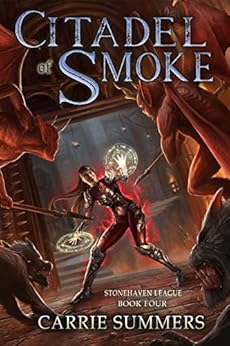
Enough background, though. Author and former (?) game developer Carrie Summers has written an engaging series of LitRPG / GameLit novels, which in the "real world" are set a few decades in the future, where virtual reality gaming has extended all the way to cybernetic implants that dump the virtual reality of the game right into our brain's perception of reality. In her first book, Temple of Sorrows, a young woman named Devon leaves her crappy job to work as a kind of "super-tester" for a gaming company, Relic Online, in order to push the game and it's artificial intelligence to the limits of what a capable, creative player can do.
Devon logs into the game, stunned at how the direct neural connection to the game world seems so incredibly real - she can feel the wind and the sun, the grass under her feet and the cloth of her clothing. Yet, the world still acts as a Computer Role-Playing Game. She has skills and abilities and she gains experience and levels up. When she kills a monster, the touch of a blade turns the monster's body into "loot" that can be used for other things. Anyone who has played a computer RPG in the last...twenty years or so will be familiar with the tropes of the world and its setting.
I don't want to give the plot away, but suffice to say, there is plenty going on in both the real world and the in-game world. This leads to dangers on both sides for Devon, something that I found interesting as it kept the story from being completely about her adventures in-game, and raised the stakes a little. And while this book is probably perfectly fine for a YA audience, there is a good deal of violence going on, so those who want action will get that, while those who like the puzzle-solving and "game-ness" of a game world will also have something to look forward to.
Overall, this is an enjoyable series. If I remember right, I've read the first three books, and I am just starting the fourth. with six books currently in the series. These books are all available in Kindle (for purchase or Kindle Unlimited) and paperback, and the first four are currently available as audiobooks. If this seems in any way interesting to you, I definitely recommend checking them out.
Friday, September 20, 2019
Wednesday, September 18, 2019
Wargaming Wednesday: eBay Miniature Rescues
Today I just wanted to spotlight a great YouTube channel, eBay Miniature Rescues. Casey is a talented painter and a very nice hobbyist (I've exchanged emails with him before and he was polite and very helpful), who specializes on - you guessed it - finding used and often ill-treated miniatures on eBay, buying them, and then doing a paint-stripping and repainting project with them. His channel appears relatively new, with only a couple dozen videos, but the quality has progressed enormously over time, and the production value of his video work is now absolutely fantastic.
Here's a recent video where Casey strips and repaints an older Warhammer Fantasy Battles model.
As you can see, pretty darn cool. Although he tends towards the fantasy side of the miniature spectrum, Casey will also do Warhammer 40,000 rescues, such as this squad of Chaos Marines:
Although Casey's painting talents far exceed my own, he's given me some of the confidence I needed to begin my own eBay rescue projects. If you are interested in going out onto eBay and finding your own miniatures, as I talked about in a previous blog post, Casey even has a video on some good searching techniques:
So, if you have any interest in the second-hand miniatures market, you absolutely should check out eBay Miniature Rescues.
Here's a recent video where Casey strips and repaints an older Warhammer Fantasy Battles model.
As you can see, pretty darn cool. Although he tends towards the fantasy side of the miniature spectrum, Casey will also do Warhammer 40,000 rescues, such as this squad of Chaos Marines:
Although Casey's painting talents far exceed my own, he's given me some of the confidence I needed to begin my own eBay rescue projects. If you are interested in going out onto eBay and finding your own miniatures, as I talked about in a previous blog post, Casey even has a video on some good searching techniques:
So, if you have any interest in the second-hand miniatures market, you absolutely should check out eBay Miniature Rescues.
Monday, September 16, 2019
Media Monday: Enjoy Entertainment For What It Is
Another short but hopefully thought-provoking post today.
First, I know this has the potential to draw in issues of social justice and other real-world problems that we are all struggling with in one way or another, and I get that. Entertainment is there, first and foremost, to entertain us, and that usually means some element of escapism. That kind of escapism is different for everyone, and while there are certainly some issues that should always be addressed, there are a lot of people for whom escapism means being able to step away from those issues. I am not going to say this is a good or a bad thing, just that it is a sentiment often expressed, and for those people, that sentiment is real. I guess that is my wishy-washy way of saying that I am trying to not directly address social issues here, but instead a more all-encompassing philosophy of entertainment.
For me, that philosophy breaks down to "Enjoy entertaining things for what they are, don't hate them for what they are not". No body of entertainment is perfect, nor can any one body of entertainment media address perfectly all aspects of itself that all consumers may find entertaining. If your go-to for entertainment is gross-out comedy movies, clearly that is not going to appeal to people whose go-to entertainment excludes gross-out humor. I see no point in anyone who dislikes gross-out humor watching such films and then complaining about them. This holds true for almost any form of entertainment, and while we might all be forgiven decades ago for going to movies or watching television shows that we were ignorant of, now that we have the Internet, that is a lack of due diligence on the part of the viewer.
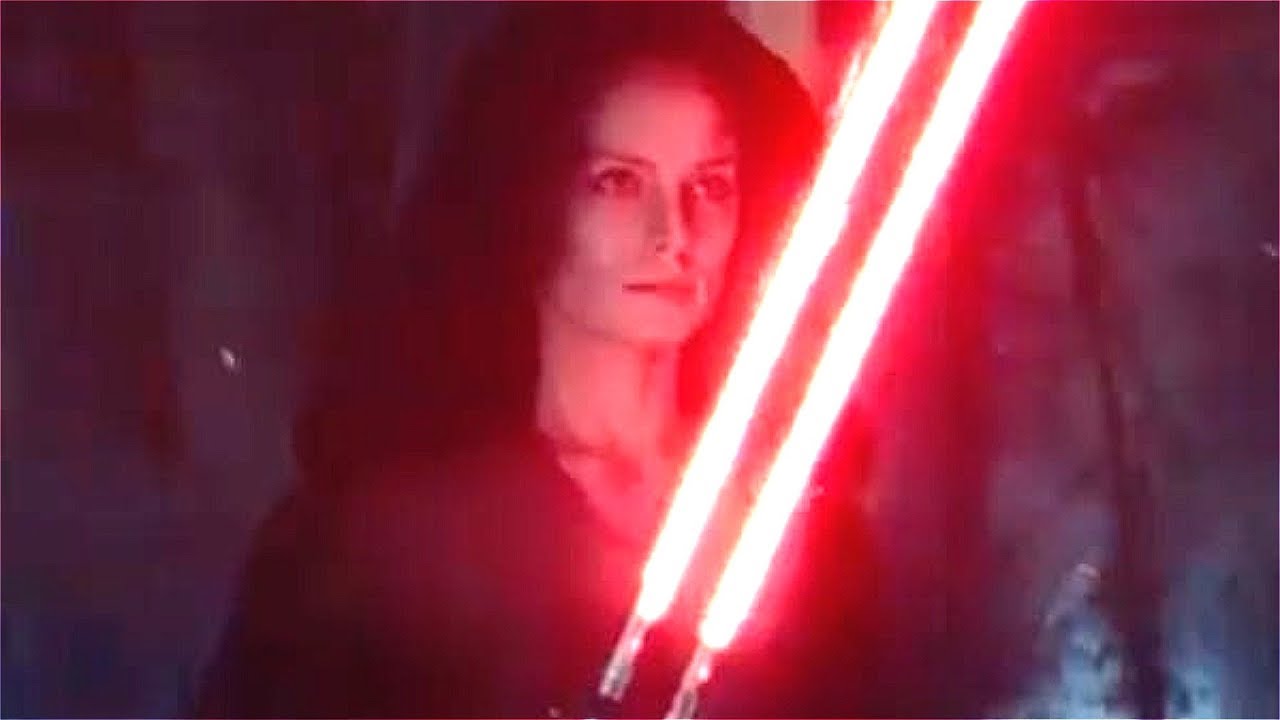
I first started (recently) thinking about this when I saw the fan-rage over the teaser trailer to the latest Star Wars movie, Episode IX, The Rise of Skywalker. There's a moment with a folding lightsaber - yes, that moment, I can see you folks in the back already twitching in your seats - and within hours, never mind days of that trailer going live, the internet was flooded with people screaming and foaming at the mouth over how stupid a gimmick this was and so on. One particular YouTube channel had a 23-minute long video complaining about the lightsaber. Do you know how long it takes to produce a reasonably professional 23-minute long YouTube video? With props and everything? This person likely invested days worth of work to make it, all to complain about something in five seconds of a trailer for a move about laser swords and space magic.
And you know why? Because the video got tens of thousands of monetized views. But that's a whole other article for another day.
People like to get outraged about things. Yes, there are issues worth getting outraged about, but the shape of a science fiction laser sword isn't one of them. This obsessive, fandom-ish need to explain and legitimize and pick apart and deconstruct every single aspect of our entertainment media is not only exhaustive, it's honestly annoying. It becomes this battleground where people spend more time arguing over their entertainment than actually enjoying anything. This is one of the reasons I don't visit Facebook groups around WW2 films or books - everyone in there is a rivet-counting asshole, and if they aren't, they get shouted down by the rivet-counting assholes. Every single movie you bring up in such a group, there's going to be someone who hates it because some aspect of it was displeasing to them.
I remember someone complaining about the end of Saving Private Ryan because when the Tiger tank is destroyed by the airplane, the plane didn't have empty bomb or rocket racks attached to its lower fuselage. I also remember someone complaining about the movie Fury, and how "laughably stupid" it was that the Tiger in that movie - in real life the only operational Tiger 1 in the entire world, acquired from the Bovington Tank Museum for use in the film - was in its 1943 Tunisian camouflage paint pattern, and not what one would see on a Tiger in mid-1945. Yeah I am sure the staff at Bovington are just going to paint over and then painstakingly strip and re-paint the only operational Tiger tank in the world just for some asshole in a movie theater. I mean, yeah, this is a bit silly.
I guess my overall point here is, be honest about what you want from entertainment, seek that out, and don't complain about what was never intended to be there. Don't watch Wizards in Space for realistic engineering and physics demonstrations. Don't watch war movies if you'll have an aneurysm over the smallest historical inaccuracy. Don't watch horror movies if you're not prepared to see stupid horror movie tropes in action. Don't watch stupid raunchy sex comedies if you're not prepared to see cringe-worthy sex and gender stereotyping. For a large percentage of the population - for good or for ill - humor is about that which causes discomfort. The Office was all about "cringe humor". America's Funniest Home Videos was all about dads getting whacked in the crotch by whiffle bats. There is no getting away from this - it is at the heart of what is entertaining for some people.
Now, to circle back to my opening statement, you can be justified in being upset at something when it tries to do that thing, but actively fails to do so. If your entertainment is about female empowerment, but you fall back on cringy, decades-old stereotypes, or if your message is that female empowerment is in some way bad and you're trying to be edgy by subverting this...than people should call you out for what you are, because you are trying to do that thing and doing it badly. This also doesn't mean you can be left off the hook for obvious racism, sexism, homophobia, and so on just by saying "well this movie was never intended to address that". We live in too-aware a society for that to be a legitimate excuse anymore. I sort of look at it like the old doctor's premise, "First, do no harm". As long as you can avoid being actively racist, sexist, and so forth, I feel you are not required to actively address those and other social issues if that is not the nature and theme of your entertainment.
At the end of the day, as I mentioned in a recent post about modern reading habits and sources of entertainment, we only have so many hours in the day in which to consume entertainment, so why would we purposefully seek out entertainment that doesn't fit with our entertainment comfort zone? Life is too short and blood pressure too high already for us to do that to ourselves.
For me, that philosophy breaks down to "Enjoy entertaining things for what they are, don't hate them for what they are not". No body of entertainment is perfect, nor can any one body of entertainment media address perfectly all aspects of itself that all consumers may find entertaining. If your go-to for entertainment is gross-out comedy movies, clearly that is not going to appeal to people whose go-to entertainment excludes gross-out humor. I see no point in anyone who dislikes gross-out humor watching such films and then complaining about them. This holds true for almost any form of entertainment, and while we might all be forgiven decades ago for going to movies or watching television shows that we were ignorant of, now that we have the Internet, that is a lack of due diligence on the part of the viewer.
![]() |
| OH NO! |
And you know why? Because the video got tens of thousands of monetized views. But that's a whole other article for another day.
People like to get outraged about things. Yes, there are issues worth getting outraged about, but the shape of a science fiction laser sword isn't one of them. This obsessive, fandom-ish need to explain and legitimize and pick apart and deconstruct every single aspect of our entertainment media is not only exhaustive, it's honestly annoying. It becomes this battleground where people spend more time arguing over their entertainment than actually enjoying anything. This is one of the reasons I don't visit Facebook groups around WW2 films or books - everyone in there is a rivet-counting asshole, and if they aren't, they get shouted down by the rivet-counting assholes. Every single movie you bring up in such a group, there's going to be someone who hates it because some aspect of it was displeasing to them.
![]() |
| THE PAINT JOB ARRRRGGGHHH! |
I guess my overall point here is, be honest about what you want from entertainment, seek that out, and don't complain about what was never intended to be there. Don't watch Wizards in Space for realistic engineering and physics demonstrations. Don't watch war movies if you'll have an aneurysm over the smallest historical inaccuracy. Don't watch horror movies if you're not prepared to see stupid horror movie tropes in action. Don't watch stupid raunchy sex comedies if you're not prepared to see cringe-worthy sex and gender stereotyping. For a large percentage of the population - for good or for ill - humor is about that which causes discomfort. The Office was all about "cringe humor". America's Funniest Home Videos was all about dads getting whacked in the crotch by whiffle bats. There is no getting away from this - it is at the heart of what is entertaining for some people.
Now, to circle back to my opening statement, you can be justified in being upset at something when it tries to do that thing, but actively fails to do so. If your entertainment is about female empowerment, but you fall back on cringy, decades-old stereotypes, or if your message is that female empowerment is in some way bad and you're trying to be edgy by subverting this...than people should call you out for what you are, because you are trying to do that thing and doing it badly. This also doesn't mean you can be left off the hook for obvious racism, sexism, homophobia, and so on just by saying "well this movie was never intended to address that". We live in too-aware a society for that to be a legitimate excuse anymore. I sort of look at it like the old doctor's premise, "First, do no harm". As long as you can avoid being actively racist, sexist, and so forth, I feel you are not required to actively address those and other social issues if that is not the nature and theme of your entertainment.
At the end of the day, as I mentioned in a recent post about modern reading habits and sources of entertainment, we only have so many hours in the day in which to consume entertainment, so why would we purposefully seek out entertainment that doesn't fit with our entertainment comfort zone? Life is too short and blood pressure too high already for us to do that to ourselves.
Friday, September 13, 2019
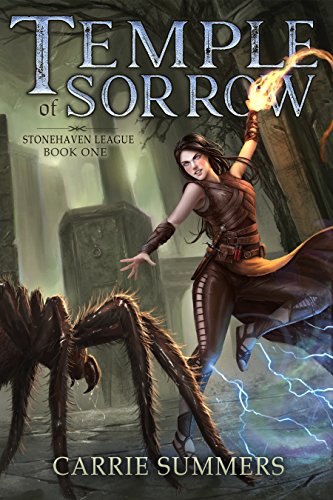
Fiction Friday: THE LAST WISH: Introducing the Witcher
If you follow video gaming at all, you've likely heard of The Witcher series of open-world RPG video games. They feature the monster-hunting Witcher, Geralt of Rivia, wandering the world and killing that which goes bump in the night. The world of the Witcher is based around Slavic folklore, a flavor of Western monster mythology that is a little removed from what most of us are used to unless you are really into the subject of bestiary folklore.
But fewer people realize that the Witcher and his world started out as a series of short stories and novels by Polish author Andrzej Sapkowski. Most of the stories were written in the 1990s, but it wasn't until the mid-oughts and later that they were given English translations. Coming at the end of this year, Netflix is releasing a television series based around the stories, and of course both fans of the books and the video games are howling over how the details shown in the trailer don't do the series justice.
Curious about both such a popular video game character and what might drive Netflix to pick up the IP, I grabbed the first (chronologically) anthology of short stories, THE LAST WISH. I was immediately hooked. For a book translated from a different language, the prose is evocative and pulls you right into the world, a very dark, late medieval-era feeling fantasy realm, very similar to the Ravenloft setting of Dungeons & Dragons. If you aren't familiar with Slavic folklore, some of the creatures might seem unusual to you, but that slightly alien nature just adds to the creepiness of the setting - this isn't some adventurer going after your usual orcs and goblins, this is a true monster hunter, for whom a blend of swords, sorcery, and dark knowledge is needed to take on the evils lurking in the deep forests and crumbling towers.
So if you like dark fairy-tale fantasy with an Eastern European bent to it, do yourself a favor and check out Sapkowski's fiction. I'll definitely find time this fall to work my way through more of Geralt's adventures.
But fewer people realize that the Witcher and his world started out as a series of short stories and novels by Polish author Andrzej Sapkowski. Most of the stories were written in the 1990s, but it wasn't until the mid-oughts and later that they were given English translations. Coming at the end of this year, Netflix is releasing a television series based around the stories, and of course both fans of the books and the video games are howling over how the details shown in the trailer don't do the series justice.
Curious about both such a popular video game character and what might drive Netflix to pick up the IP, I grabbed the first (chronologically) anthology of short stories, THE LAST WISH. I was immediately hooked. For a book translated from a different language, the prose is evocative and pulls you right into the world, a very dark, late medieval-era feeling fantasy realm, very similar to the Ravenloft setting of Dungeons & Dragons. If you aren't familiar with Slavic folklore, some of the creatures might seem unusual to you, but that slightly alien nature just adds to the creepiness of the setting - this isn't some adventurer going after your usual orcs and goblins, this is a true monster hunter, for whom a blend of swords, sorcery, and dark knowledge is needed to take on the evils lurking in the deep forests and crumbling towers.
So if you like dark fairy-tale fantasy with an Eastern European bent to it, do yourself a favor and check out Sapkowski's fiction. I'll definitely find time this fall to work my way through more of Geralt's adventures.
Wednesday, September 11, 2019
Wargaming Wednesday: Don't Feel Guilt Buying on eBay
Maybe this is a more controversial topic than I believe it is, but I find weird the pressure people feel against buying second-hand or portioned out miniatures on eBay. To be clear, I am not talking about buying re-casted (aka, illegally copied) miniatures - that's a no-no and should never happen. I'm talking about buying out-of-production miniatures, or second-hand miniatures owned previously by someone else, even if that person just bought a large boxed set (like Games Workshop's Dark Imperium boxed set) and is selling the individual miniatures a few at a time.
There can be a lot of reasons why you'd want to do this. For the out-of-production miniatures, you might just like a particular sculpt of a miniature, but it isn't made anymore. For me, I want to eventually buy and paint one of every GW Space Marine Chaplain, but there are only a handful still being made, while plenty of models with perfectly viable equipment loadouts are still usable in the current version of the game. Another reason might be that you're building, for example, a small display army using older, "retro" models. A lot of people these days are making small Rogue Trader-era forces more for the fun of rediscovering the models than anything else.
Another aspect to buying online might be to find a model you want that's not available on its own. For Primaris Space Marines, for example, you cannot buy a Primaris Ancient (aka, Standard Bearer) as its own model anywhere except eBay, since it only comes in the Dark Imperium boxed set. The same goes for the Gravis Captain. In the past, this was likewise the case with other armies. The first official generic Ork Warboss to come with a power klaw didn't arrive until the Assault on Black Reach boxed set for 40K's 5th edition, along with Ork Deffkoptas mounted with rokkits (and the old Deffkopta model is absolutely hideous and ancient).
And of course, another reason might be that you want that ONE particular bit for a model you're making. Maybe you like the look of a certain helmet or sword or gun. Maybe it fits with a theme, maybe the normal kit the part comes in only has 1 per box, and you need five. Sure, you're going to pay more money for it, but this is a leisure hobby, and eBay bits sellers are working from a sellers' market. I've bought plenty of little bits over time in order to build units of a certain theme, and while you're paying a premium for having that degree of choice, I never once felt cheated by the prices.
The biggest criticism or worry I've seen from people who don't want to buy on eBay is that you're not giving money to your Friendly Local Game Store (FLGS). Sure, that's true, but the same reasons you'd be buying on eBay are the same reasons you're not buying at your FLGS - the models and bits are either out of production, or they come in a larger boxed set and aren't sold individually. No one should feel guilty you're not buying a $160 boxed set from your FLGS when all you want is a handful of miniatures you can get on eBay for a fraction of that cost. And as for the idea that Games Workshop isn't getting your money - well, that's bullshit. They got their money for that particular model when that model was first purchased. It doesn't matter if the miniature is 30 years old - at some point, someone gave the company money for that object, and that's that. I hear this as an argument against used book stores pretty frequently - that it keeps the money from the hands of the author - but that's just a guilt trip. A paperback novel is an object, and there's no reason to not sell or give away an object when you are done with it. Conversely, there's no reason you should feel guilt buying it second-hand.
So, with that in mind, if you're looking to build a miniatures army, and you're willing to give older miniatures a little TLC, go onto eBay and do a little investigating. You might be surprised at what you find!
![]() |
| These out-of-production models were purchased like this on eBay |
There can be a lot of reasons why you'd want to do this. For the out-of-production miniatures, you might just like a particular sculpt of a miniature, but it isn't made anymore. For me, I want to eventually buy and paint one of every GW Space Marine Chaplain, but there are only a handful still being made, while plenty of models with perfectly viable equipment loadouts are still usable in the current version of the game. Another reason might be that you're building, for example, a small display army using older, "retro" models. A lot of people these days are making small Rogue Trader-era forces more for the fun of rediscovering the models than anything else.
![]() |
| Some of the above, now stripped of paint and ready for rebirth! |
Another aspect to buying online might be to find a model you want that's not available on its own. For Primaris Space Marines, for example, you cannot buy a Primaris Ancient (aka, Standard Bearer) as its own model anywhere except eBay, since it only comes in the Dark Imperium boxed set. The same goes for the Gravis Captain. In the past, this was likewise the case with other armies. The first official generic Ork Warboss to come with a power klaw didn't arrive until the Assault on Black Reach boxed set for 40K's 5th edition, along with Ork Deffkoptas mounted with rokkits (and the old Deffkopta model is absolutely hideous and ancient).
![]() |
| Tactical marines from the 1993 (!!!) 2nd Edition 40K boxed set. |
![]() |
| This Chaplain model has long been OOP. His gun is also an eBay bit purchase. |
So, with that in mind, if you're looking to build a miniatures army, and you're willing to give older miniatures a little TLC, go onto eBay and do a little investigating. You might be surprised at what you find!
![]() |
| For the Emperor! |
Monday, September 9, 2019
Media Monday: The Kindle eBook Reader
I'm not sure when I bought my first eBook. It was probably around 2010, and I think I would have bought it using the Kindle app on a work-provided iPad. Not much later, or perhaps around the same time, I had the app on an iPod Touch (I didn't have a smartphone). This was around the time that I was starting to connect with other authors, and I was beginning work on my first novel, as well as tinkering with short story concepts. Many of the older authors I was talking to were reclaiming rights to their backlists, while newer authors were experimenting with self-publishing, so I bought a few eBooks and began to read.
Reading on an iPod Touch was OK, especially since the device was small and easy to carry around. Reading on a 1st Generation iPad was more cumbersome, since the tablet is large and comparatively heavy. It is also quite bright if the screen is turned up, but when the brightness is lowered, it is much harder to use. The irritation of having a bright screen shining in my face at close range made reading for extended periods of time rather uncomfortable. Still, I liked the various features the Kindle app provided - the ability to "whispersync" your place in an eBook across multiple devices, and of course, the ability to instantly buy and download a new book. It did not take long for me to see the many benefits in eBook technology.
Shortly after publishing my first pieces of short fiction in 2011, I decided it was time to get a Kindle. I bought it in December of 2011, and was immediately impressed. While the keyboard might make it a little intimidating or "retro" at first, and the e-ink contrast isn't as sharp as later models, I immediately found the e-ink technology extremely comfortable to read. There was no light shining directly into my face, the side buttons turning the page allowed one to keep reading with a brief twitch of my thumb, and the ability to adjust font size, line spacing, and character density made reading very easy on my eyes, which is especially important for me, as my eyesight isn't great, and paperback fonts tend to be small and cramped.
A little more than a year later, I did buy a 7" Samsung tablet, and while it was so much better to read on than my tiny smartphone or the large, cumbersome iPad, it still shined a bright light in my face, and once I purchased a larger LG smartphone, I found the tablet redundant. A few months later, addressing the one major flaw in my Kindle (the lack of a reading light), I bought a Kindle Paperwhite in 2013. While I missed the buttons - and it was harder to take notes with the touch keyboard vs the actual physical button keyboard - the Paperwhite was smaller, lighter, and the adjustable light, which shown across the page, rather than out from behind it, made reading in low light extremely easy.
There are a lot of people out there who speak derisively of eBooks and Kindles. Some complain that Amazon doesn't use the EPUB file format, which means Amazon eBooks don't work on other e-readers. They complain that eBooks purchased on other platforms don't work on the Kindle. Neither of these arguments really bother me, since the only two e-ink competitors are the Nook and the Kobo, and frankly, if you tied your line to either of those brands, I'm sorry to say, you've got problems. Beyond that, apps from other booksellers can install on most phones and mobile devices, regardless of file type. Other people complain about DRM (Digital Rights Management - aka, anti-piracy technology), but frankly, that's put in place at the request of the publisher, not the distributor, so if you have a problem with an Amazon eBook having DRM, write the publisher, not Mr. Bezos.
And of course, there's the "I just love books" argument. People love the feel of a book, the smell of paper, the act of turning pages, blah blah blah. Look, no one is forcing a Kindle into your hands and dragging your books out of your house to throw into the back of a dump truck. Contrary to popular opinion, Marie Kondo isn't telling you to ONLY keep 30 books in your house (I have her book - in paper no less - and she says no such thing). For some reason, people seem to think that proponents of eBooks live some weird minimalist, digital-only lifestyle. I own two e-readers, and I've got sixteen bookcases filled to the damn brim with books. There's books everywhere you turn in my home, and you know what - that's one of the reasons I like the Kindle. I don't have to go digging through piles and bookcases looking for a book, it's right there in the Kindle inventory. I don't need to worry about packing "backup" books when I go on a trip, because I've already got several hundred right there with me.
Does it need to be recharged? Sure, maybe every couple of weeks it needs to be plugged in for a couple of hours. My phone needs to be recharged every day, sometimes twice a day depending on how much I use it. A laptop might need to be recharged every few hours. Compared to most of the electronic devices you use every day, the Kindle, comparatively, lasts an order of magnitude longer. Both of mine are 6+ years old, and I can still read 2-3 novels on them before the battery runs out. It takes the barest minimum of device power management to make this a non-issue. And, other than that, I don't see many drawbacks to these devices. The Paperwhite weights about the same as a paperback novel, and the newer versions of the Kindle line are even lighter.
In conclusion, eBooks and the e-reader have completely changed the way I buy and read books, making it a much more immediate experience. I still buy used, vintage paperbacks for my collections, and I still buy paper books for research because it is easier to find a specific page or diagram in a paper book, but for casual, leisure reading, it's almost exclusively done via eBooks.
Reading on an iPod Touch was OK, especially since the device was small and easy to carry around. Reading on a 1st Generation iPad was more cumbersome, since the tablet is large and comparatively heavy. It is also quite bright if the screen is turned up, but when the brightness is lowered, it is much harder to use. The irritation of having a bright screen shining in my face at close range made reading for extended periods of time rather uncomfortable. Still, I liked the various features the Kindle app provided - the ability to "whispersync" your place in an eBook across multiple devices, and of course, the ability to instantly buy and download a new book. It did not take long for me to see the many benefits in eBook technology.
![]() |
| My 2011 Kindle (left) and 2013 Kindle Paperwhite (right) |
Shortly after publishing my first pieces of short fiction in 2011, I decided it was time to get a Kindle. I bought it in December of 2011, and was immediately impressed. While the keyboard might make it a little intimidating or "retro" at first, and the e-ink contrast isn't as sharp as later models, I immediately found the e-ink technology extremely comfortable to read. There was no light shining directly into my face, the side buttons turning the page allowed one to keep reading with a brief twitch of my thumb, and the ability to adjust font size, line spacing, and character density made reading very easy on my eyes, which is especially important for me, as my eyesight isn't great, and paperback fonts tend to be small and cramped.
A little more than a year later, I did buy a 7" Samsung tablet, and while it was so much better to read on than my tiny smartphone or the large, cumbersome iPad, it still shined a bright light in my face, and once I purchased a larger LG smartphone, I found the tablet redundant. A few months later, addressing the one major flaw in my Kindle (the lack of a reading light), I bought a Kindle Paperwhite in 2013. While I missed the buttons - and it was harder to take notes with the touch keyboard vs the actual physical button keyboard - the Paperwhite was smaller, lighter, and the adjustable light, which shown across the page, rather than out from behind it, made reading in low light extremely easy.
![]() |
| Way to be an elitist shitbag! |
And of course, there's the "I just love books" argument. People love the feel of a book, the smell of paper, the act of turning pages, blah blah blah. Look, no one is forcing a Kindle into your hands and dragging your books out of your house to throw into the back of a dump truck. Contrary to popular opinion, Marie Kondo isn't telling you to ONLY keep 30 books in your house (I have her book - in paper no less - and she says no such thing). For some reason, people seem to think that proponents of eBooks live some weird minimalist, digital-only lifestyle. I own two e-readers, and I've got sixteen bookcases filled to the damn brim with books. There's books everywhere you turn in my home, and you know what - that's one of the reasons I like the Kindle. I don't have to go digging through piles and bookcases looking for a book, it's right there in the Kindle inventory. I don't need to worry about packing "backup" books when I go on a trip, because I've already got several hundred right there with me.
![]() |
| Mmmm, smells like mold, cigarette smoke, and cat piss. |
In conclusion, eBooks and the e-reader have completely changed the way I buy and read books, making it a much more immediate experience. I still buy used, vintage paperbacks for my collections, and I still buy paper books for research because it is easier to find a specific page or diagram in a paper book, but for casual, leisure reading, it's almost exclusively done via eBooks.
Friday, September 6, 2019
Fiction Friday: The Original Dragonlance Chronicles Trilogy
Just a quick post today as I wrap up a busy work week. I cribbed this off of my Facebook feed in response to a Tor Books post about the original "Chronicles" Dragonlance tie-in novels, and how formative those novels were to a generation of role-playing gamers and fantasy enthusiasts. For many folks (myself included) we read these books before Conan or Lord of the Rings.
You can read the Tor.com article here.
No joke, I think the author stole the memories of my early teenage years and used them to write this piece. Until maybe my sophomore year of high school, I'd always eschewed fantasy and science fiction in favor of shoot 'em up men's adventure and espionage thrillers, until one day a classmate of mine loaned me these three books. This was at least a year before I first played Dungeons & Dragons, and long before I tried reading The Hobbit or Lord of the Rings. I still have my original three paperbacks, bought after reading this for the first time almost 30 years ago.
After getting into D&D, I did buy the second edition "Tales of the Lance" boxed set, although I never did play it. Frankly, I feel like it isn't really superior to the Dragonlance Adventures hardcover for 1E that came out in the '80s. I remember seeing this advertised in the back of comic books, before I got into D&D or really understood what it was or how it played. I remember staring at this all the time, thinking it seemed like the most badass thing I could imagine. When I got into D&D later on, I did buy the 2nd edition Tales of the Lance boxed set, but just didn't appreciate it as much as the 1E Dragonlance Adventures hardcover, which I acquired in a used book store my freshman year of college.
It has been years since I re-read the original trilogy. I started re-reading Kindle editions, and while it didn't disappoint, I had read them so many times, knowing what was about to happen meant I eventually started reading something else and didn't get back to it, but yeah, I do want to give 'em another go, although I am a little nervous as to whether they'll hold up or not. It is simply a matter of remembering that they represent fantasy and RPGs at a certain particular point in time, and appreciate them for what they are, instead of criticizing them for what they are not.
You can read the Tor.com article here.
No joke, I think the author stole the memories of my early teenage years and used them to write this piece. Until maybe my sophomore year of high school, I'd always eschewed fantasy and science fiction in favor of shoot 'em up men's adventure and espionage thrillers, until one day a classmate of mine loaned me these three books. This was at least a year before I first played Dungeons & Dragons, and long before I tried reading The Hobbit or Lord of the Rings. I still have my original three paperbacks, bought after reading this for the first time almost 30 years ago.
After getting into D&D, I did buy the second edition "Tales of the Lance" boxed set, although I never did play it. Frankly, I feel like it isn't really superior to the Dragonlance Adventures hardcover for 1E that came out in the '80s. I remember seeing this advertised in the back of comic books, before I got into D&D or really understood what it was or how it played. I remember staring at this all the time, thinking it seemed like the most badass thing I could imagine. When I got into D&D later on, I did buy the 2nd edition Tales of the Lance boxed set, but just didn't appreciate it as much as the 1E Dragonlance Adventures hardcover, which I acquired in a used book store my freshman year of college.
It has been years since I re-read the original trilogy. I started re-reading Kindle editions, and while it didn't disappoint, I had read them so many times, knowing what was about to happen meant I eventually started reading something else and didn't get back to it, but yeah, I do want to give 'em another go, although I am a little nervous as to whether they'll hold up or not. It is simply a matter of remembering that they represent fantasy and RPGs at a certain particular point in time, and appreciate them for what they are, instead of criticizing them for what they are not.
Subscribe to:
Posts (Atom)


.jpg/revision/latest?cb=20150402023959)